SustainNext: Deloitte’s Climate Reporting Platform
Deloitte’s first AI-enabled climate reporting platform, built to help Australian organisations comply with the new AASB S2 climate reporting regulation.
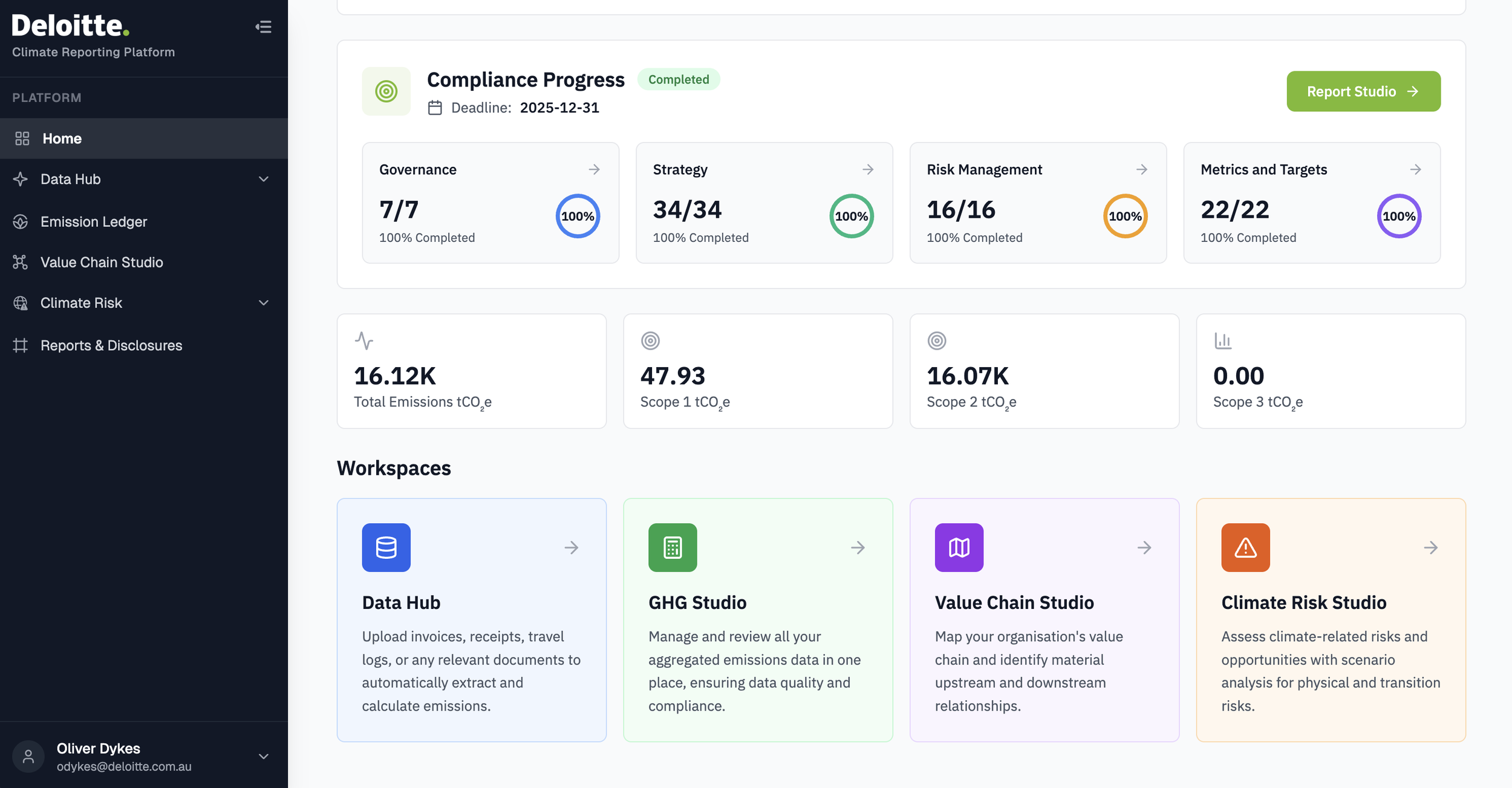
The market was large and urgent: 9,000+ companies entering mandatory reporting in 2025–2026. The work required translating complex climate science, emissions calculations, financial impacts, risk modelling, and assurance requirements into a coherent, self-serve workflow.
It’s an impactful opportunity because climate reporting now shapes corporate strategy, risk management and investment signals across the Australian economy, helping shape a new wave of change in the Australian corporate landscape.
Role & Responsibilities
Defined product vision, UX flow, value proposition and operating model.
Led UX, product, and service design and fuelled a multi-year GTM strategy.
Conducted customer research/testing; shaping roadmap and pricing.
Led a cross-functional delivery team across business, technology, technical, GTM and Q&R.
Partnered closely with engineers on architecture, feasibility and scaling.
Designed a new digital-led approach to mid-market climate reporting.
-
![]()
-
![]()
-
![]()
-
![]()
-
![]()
New List Item
-
![]()
New List Item
What made this problem difficult
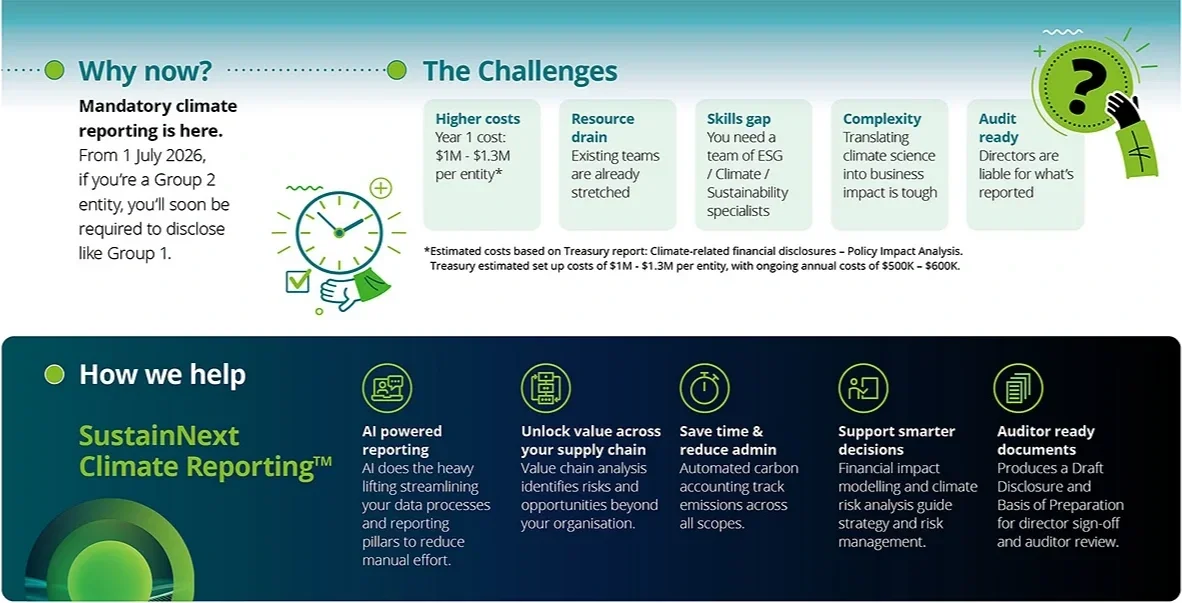
This is a highly regulated space: directors have legal liability for signing disclosures that are not factual or complete, so any Deloitte-backed self-service platform must meet the strictest quality, evidence and risk standards.
Climate regulation and science are complex, nuanced and expert-driven; few people understand it end-to-end.
Deloitte’s consulting-first model and risk aversion created tension with building an AI-enabled, scalable, self-serve product.
Partnering with an India-based scale-up tech provider required aligning two very different ways of working and delivery cultures.
Deloitte lacked relationships with mid-market customers, making user research hard but essential.
Tight timelines: Deloitte wanted to be first-to-market before Big Four competitors and climate-tech vendors.
The key strategic design questions
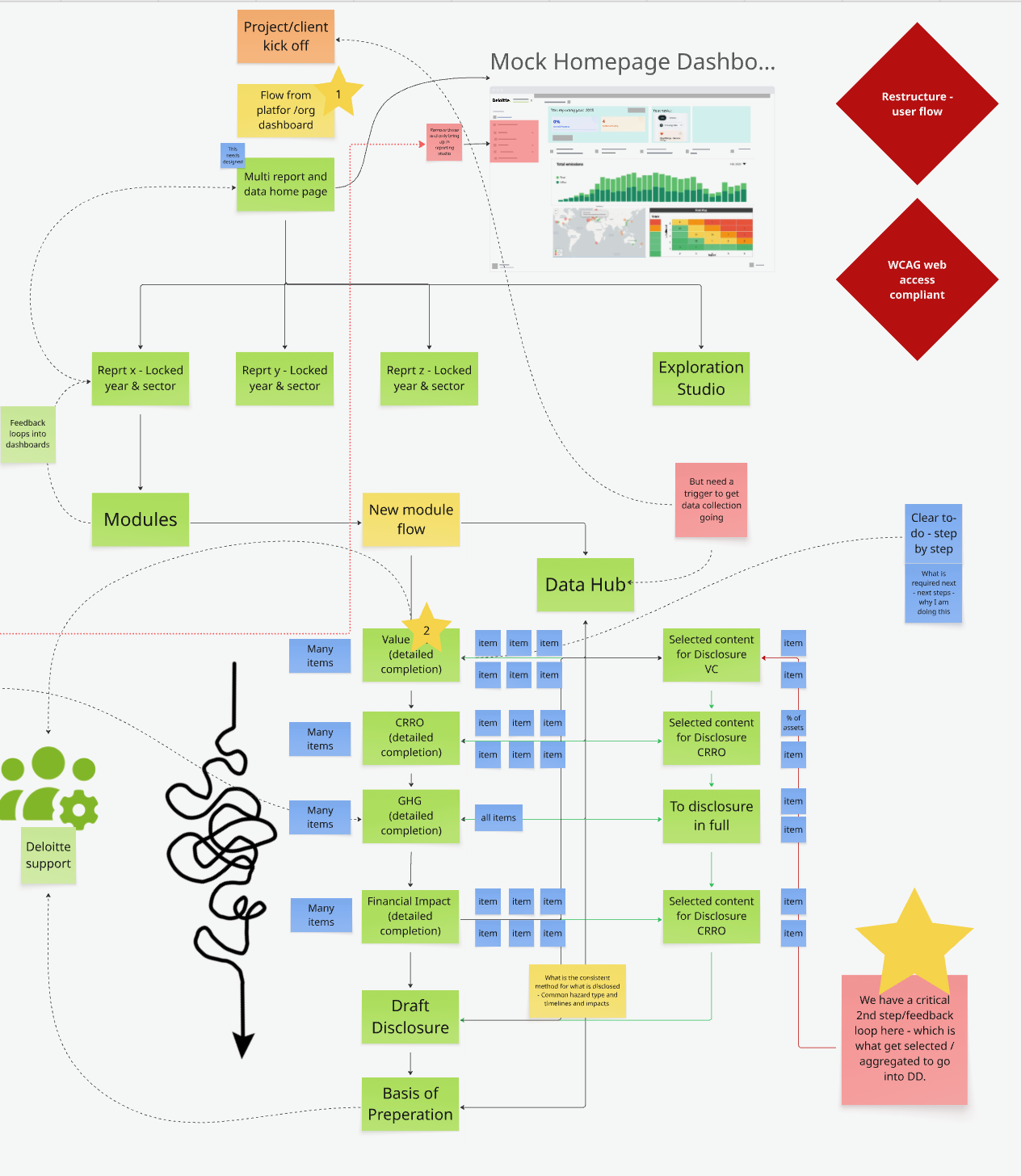
How do we convert around 100 regulatory questions and complex data creation into a simple, repeatable workflow that non-experts can follow?
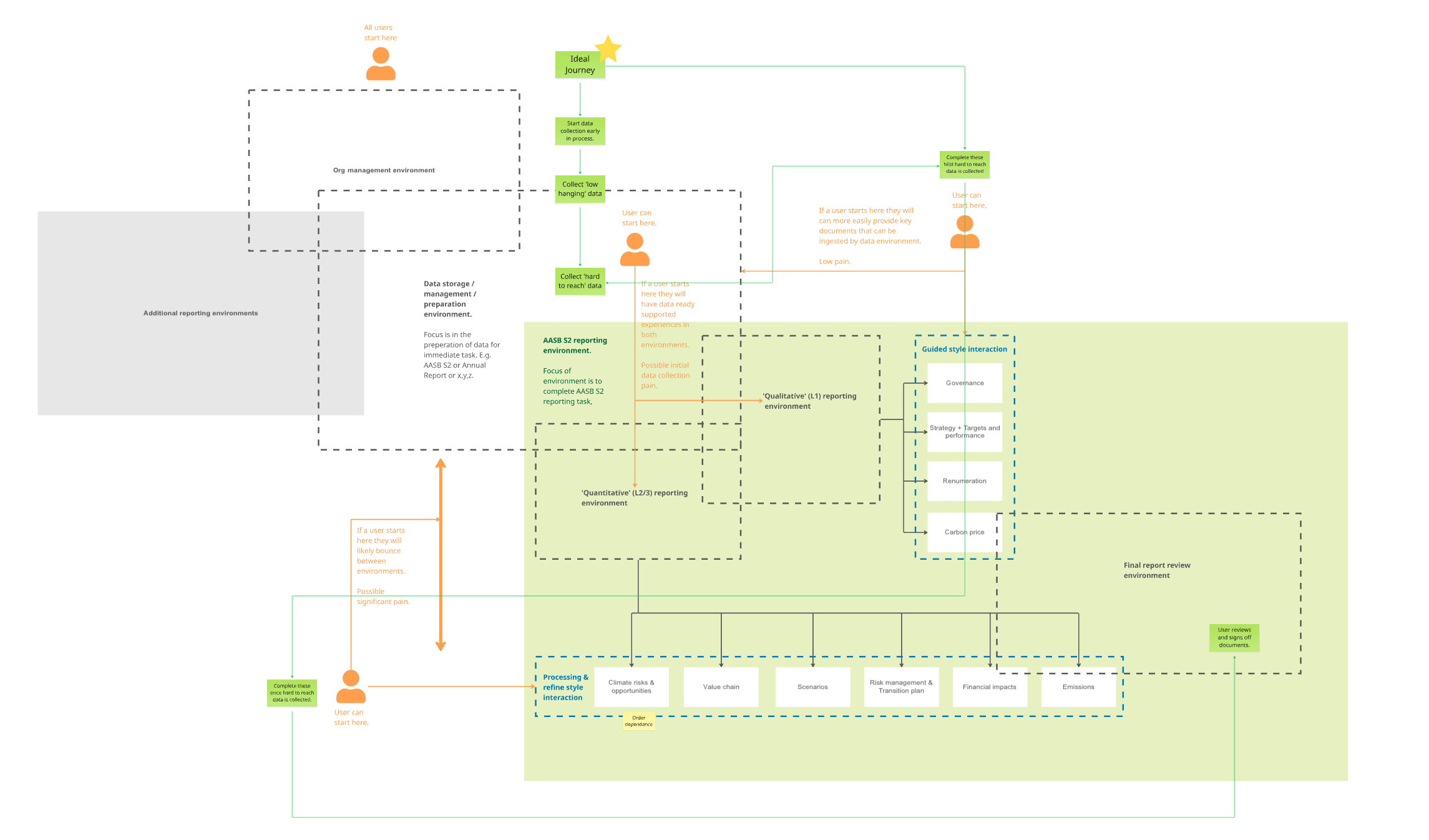
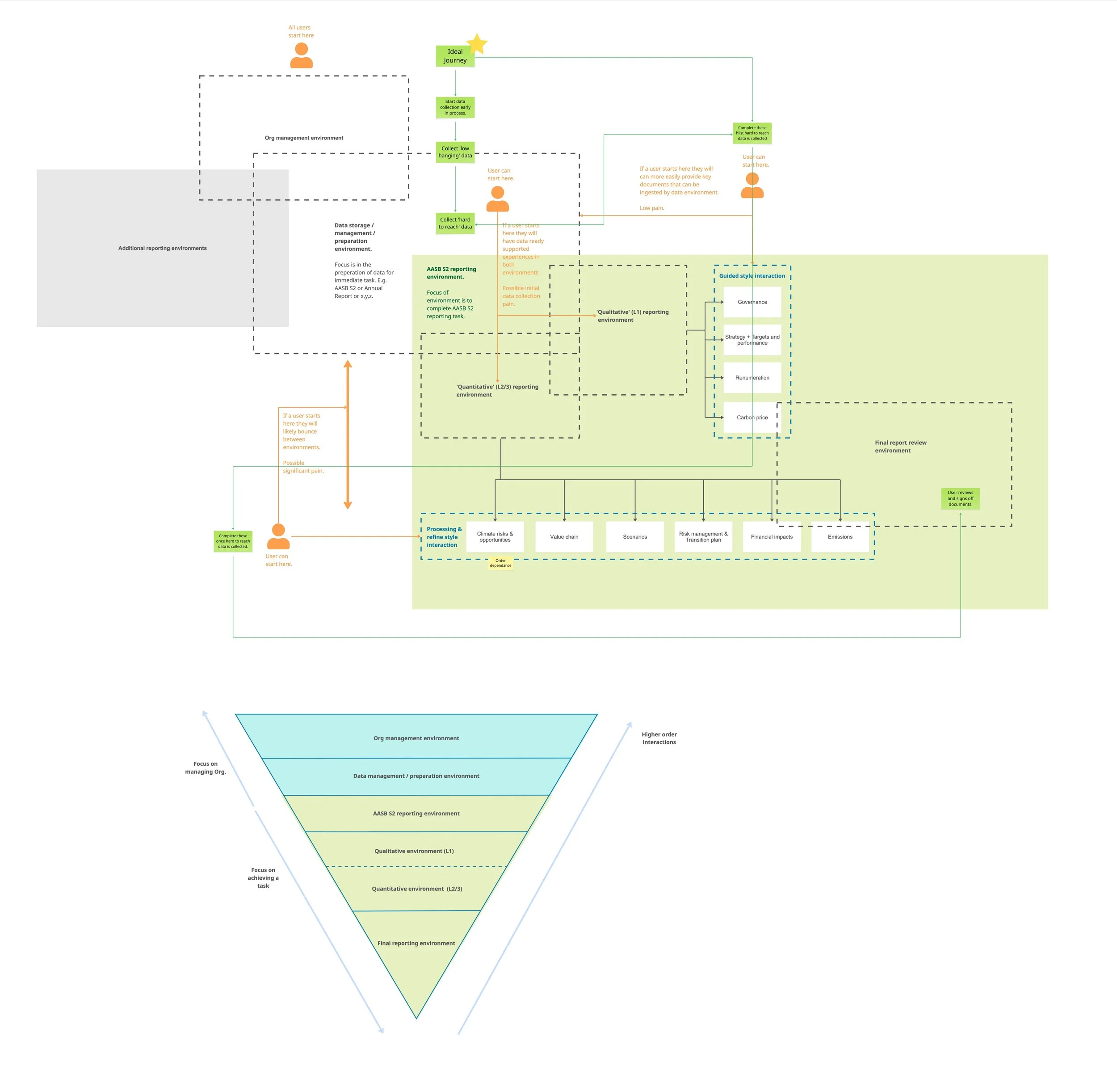
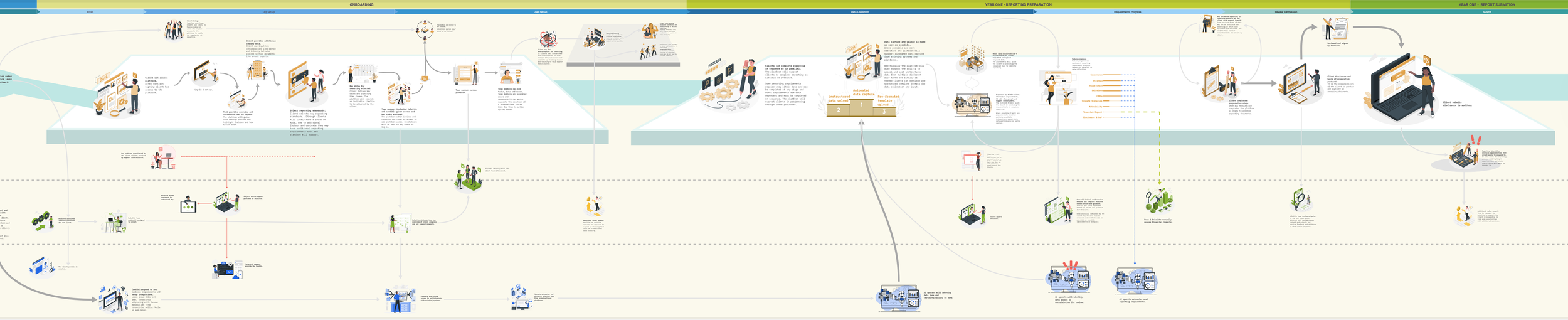
How should the user flow through the platform when technologies and data processing completely change the traditional user journey?
How do you create a confident self-service experience that leads to quality outputs when the user is not an expert navigating a complex and technical process?
What pricing and operating model is attractive for Deloitte and mid-market clients, balancing desirability, feasibility and viability?
Design decisions
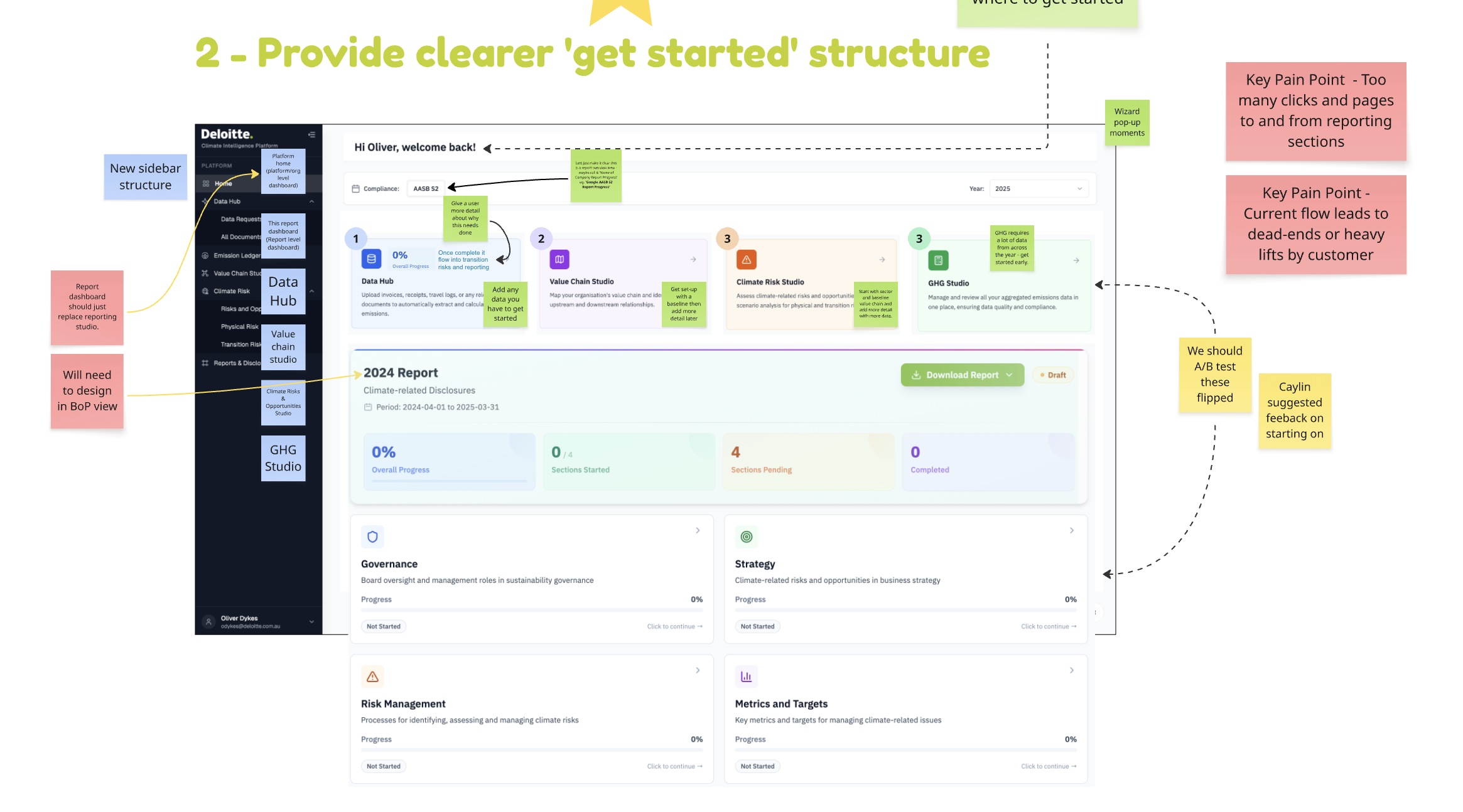
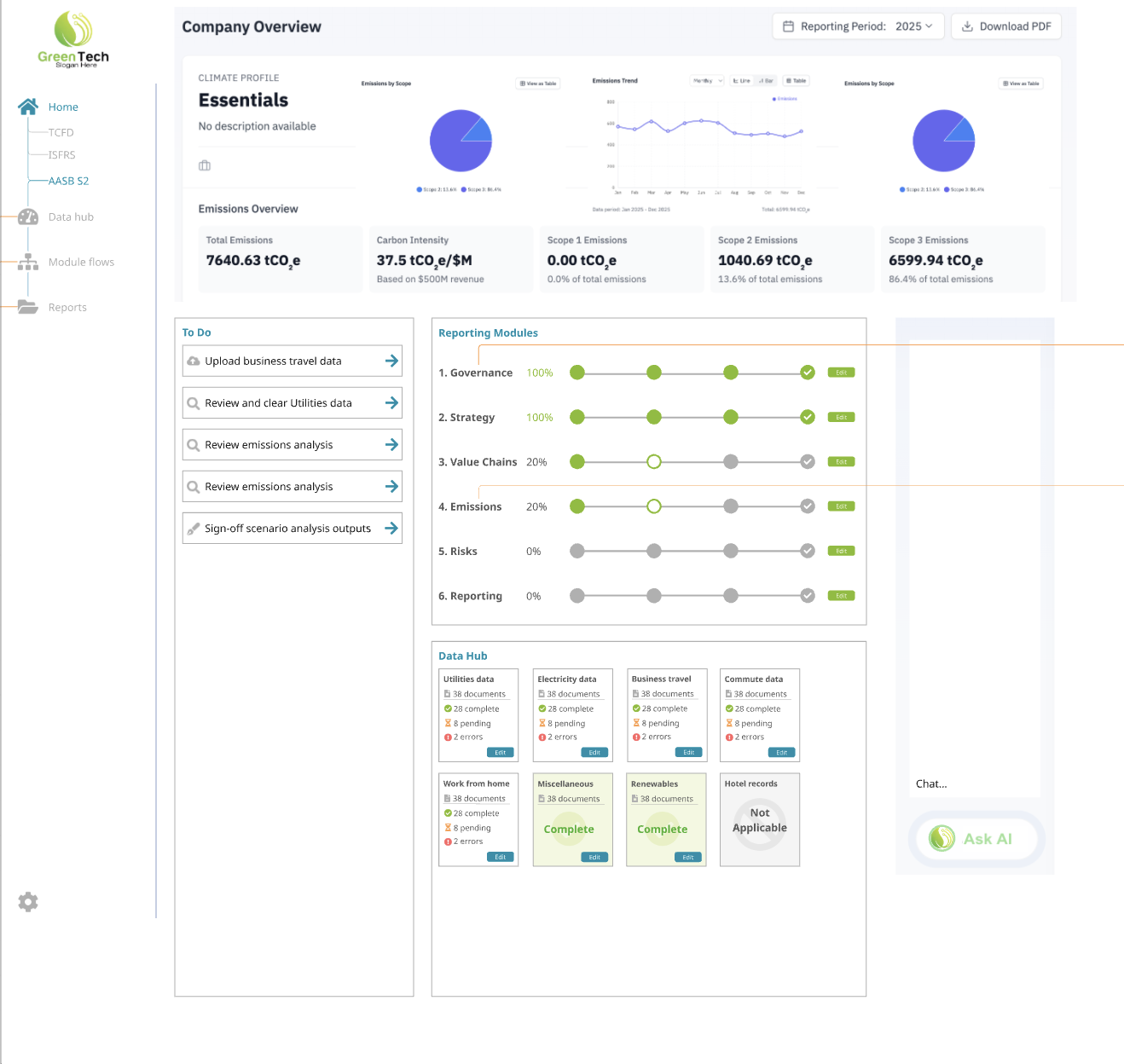
1: Establishing a new technology-driven end-to-end workflow
Issue: The initial build mirrored traditional consulting workflows, front-loading heavy data tasks, making the first interaction an overbearing effort and delaying value to the user.
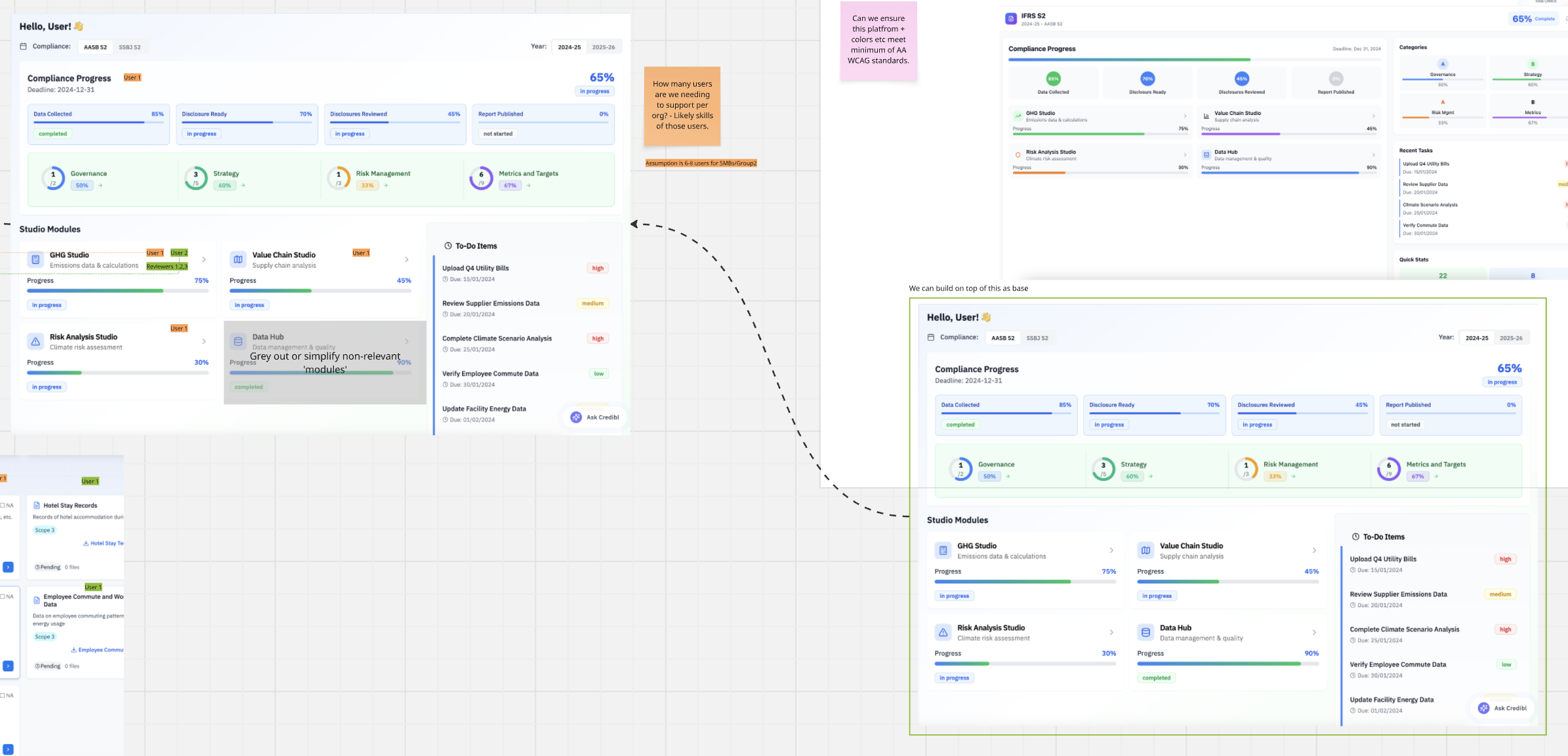
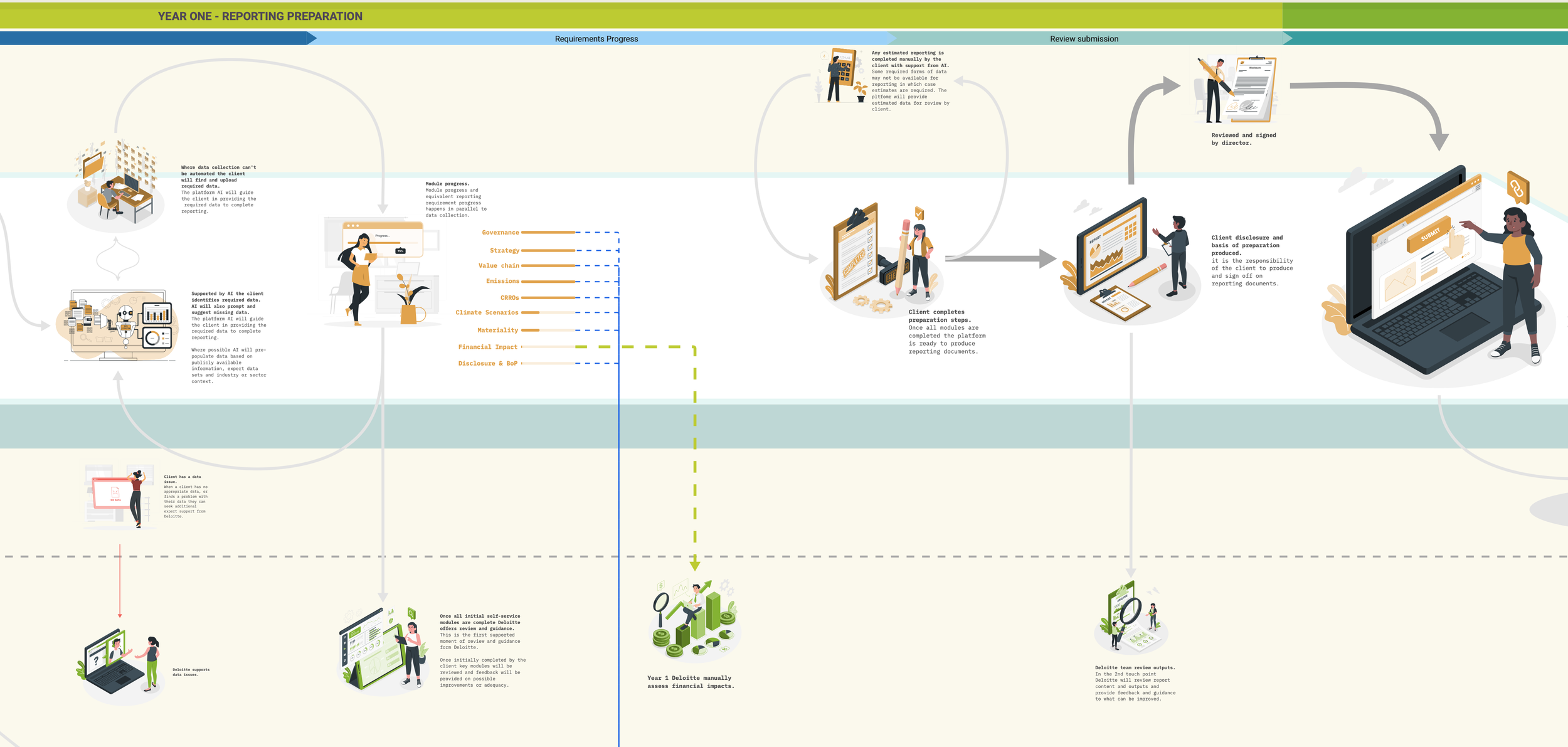
Decision: Utilising the new capabilities of the platform, I remapped the core user flow and biased UX towards activities that start with low effort and immediate value.
Trade-offs: Required significant investment in stakeholder management, showcasing prototypes to convince SMEs and partners that deviating from traditional processes provides a better user experience and more value.
Why it was right: Users felt immediate value, had something to act on immediately, whilst higher effort activities were conducted in parallel rather than stage gates, enabling a consistent sense of value and progress.
After testing: Users validated the core journey and we introduced additional refinement loops as all outputs need to be refined before disclosure.
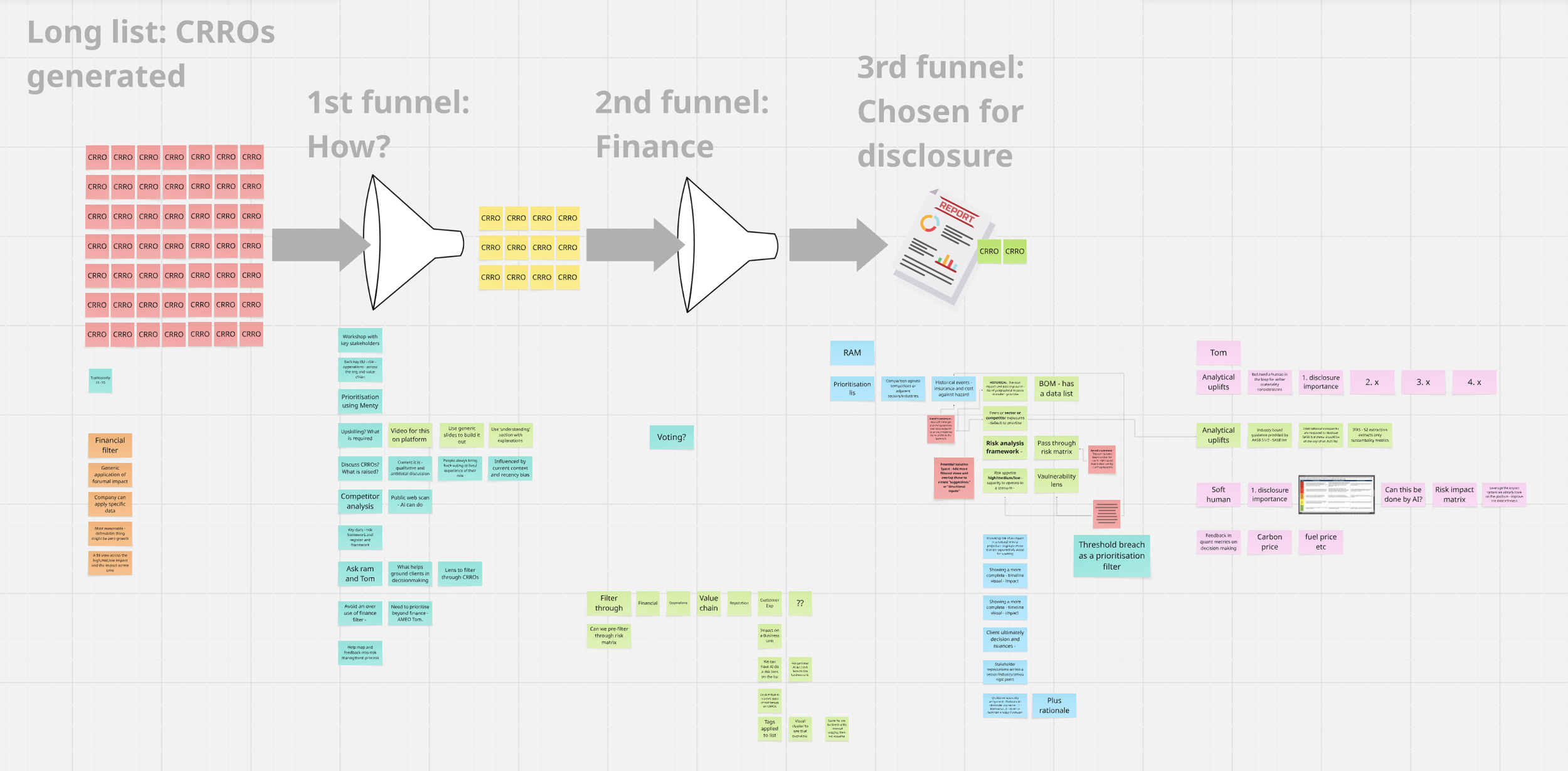
2: Designing manageable experiences for overwhelming data outputs
Issue: The platform generates hundreds of activities and risks (vs 10–30 in traditional consulting), overwhelming the user experience, with only weeks until our first client launch.
Decision: Led cross-discipline ideation between technical and engineering to create a UX flow that makes filtering data manageable through compartmentalising the data structure and providing better information hierarchy.
Trade-offs: Deferred enhanced user experiences through AI-guided features to future releases, so that we could meet the launch deadline.
Why it was right: Created a manageable experience that enabled us to launch on time with strong user self-service experience.
After testing: We will retain a light version of this process because even with AI features, it enhances the usability of the data provided.
3: Building intentional human-in-the-loop moments
Issue: The product is meant to be self-serve, but users lacked confidence in whether they were “doing it right”. Climate reporting is high-risk and unfamiliar.
Decision: Added structured Deloitte review checkpoints as part of a managed service overlay.
Trade-offs: Lower margins in Year 1, but higher retention and repeatability in Year 2+.
Why it was right: Became a differentiator: “Product + Deloitte expertise” at a mid-market price point.
Reflections
Proud of:
Simplifying a highly technical regulatory regime into an experience that non-experts can navigate.
Designing product, service and GTM strategy, all anchored in user insight.
Orchestrating ways of working between Deloitte and our tech partner to ensure smooth collaboration and accelerate outcomes.
Uplifting non-designers to extend design capacity in a fast delivery environment.
Would change:
Have design engaged earlier to direct early flows and prototypes before building to prioritise key platform requirements and flows rather than building sequentially through the traditional process.
Invest earlier in mid-market user research to develop archetypes for faster decision-making.
Outcomes
First-to-market end-to-end AASB S2 climate reporting platform in Australia.
$4m+ pipeline pre-launch; 10 LOIs from anchor clients.
400+ webinar registrations; strong funnel signals.
Internal climate work reduced from weeks/months to days/hours.
Expansion to NZ, India, UK, Korea, Japan underway.
Strong user signals: clarity, confidence, reduced anxiety.