Queensland Government: Digital Inclusion Learning & Support Website
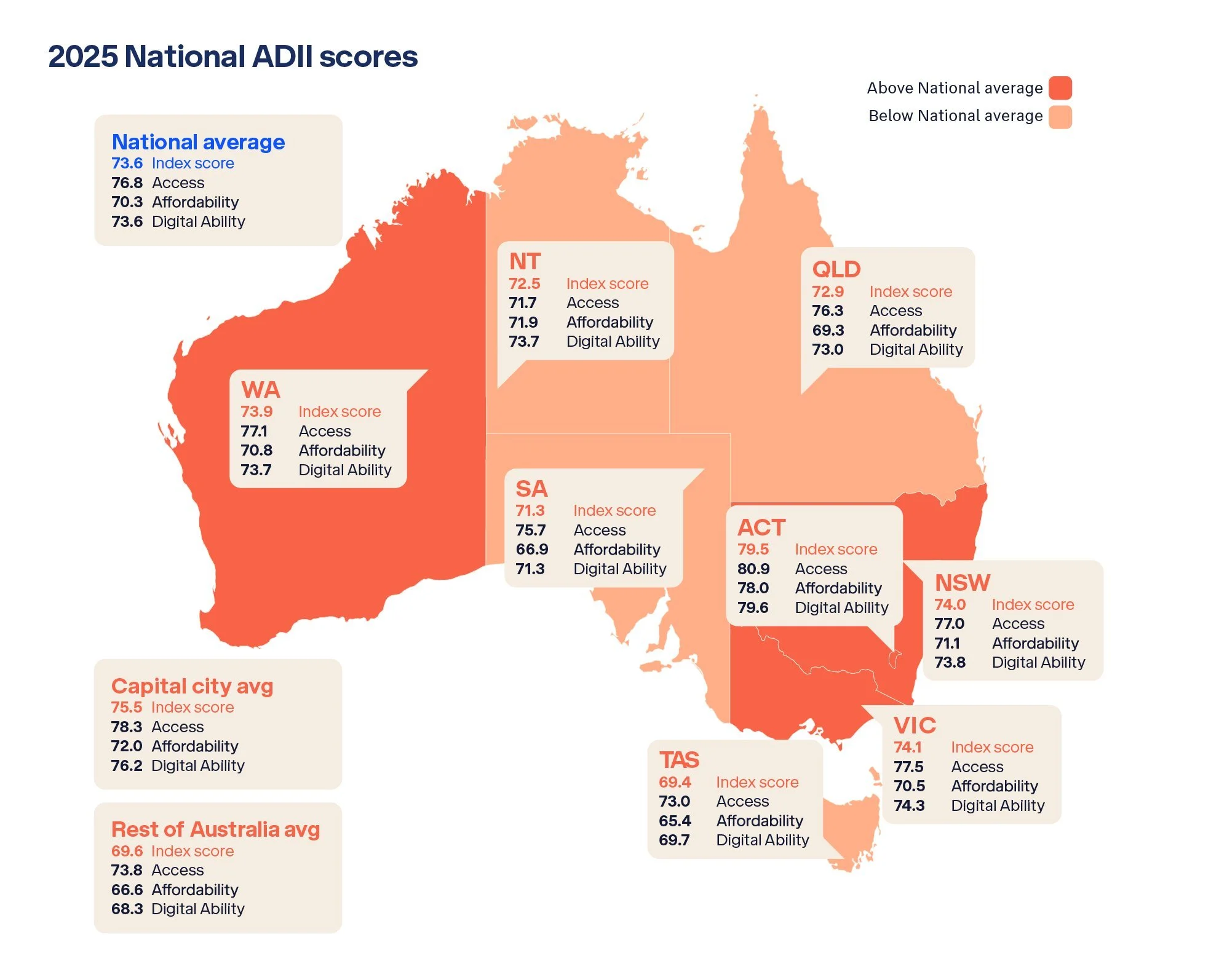
Queensland faces one of Australia’s largest digital divides, particularly across First Nations communities, older adults, regional residents and migrants.
The Government needed a practical platform to help vulnerable citizens build digital capability so they could safely and confidently participate in the digital economy and access essential services.
Our goal was to build on the Digital Inclusion Strategy to create a learning and support platform that made trusted, free and accessible digital skills support easy to find, while helping government understand service gaps.
This mattered because digital exclusion compounds vulnerability. Improving digital capability directly affects access to education, safety, employment, health, and housing for hundreds of thousands of Queenslanders.
Role & Responsibilities
Led a cross-disciplinary team in defining strategy, service model and digital experience across self-serve and assisted pathways.
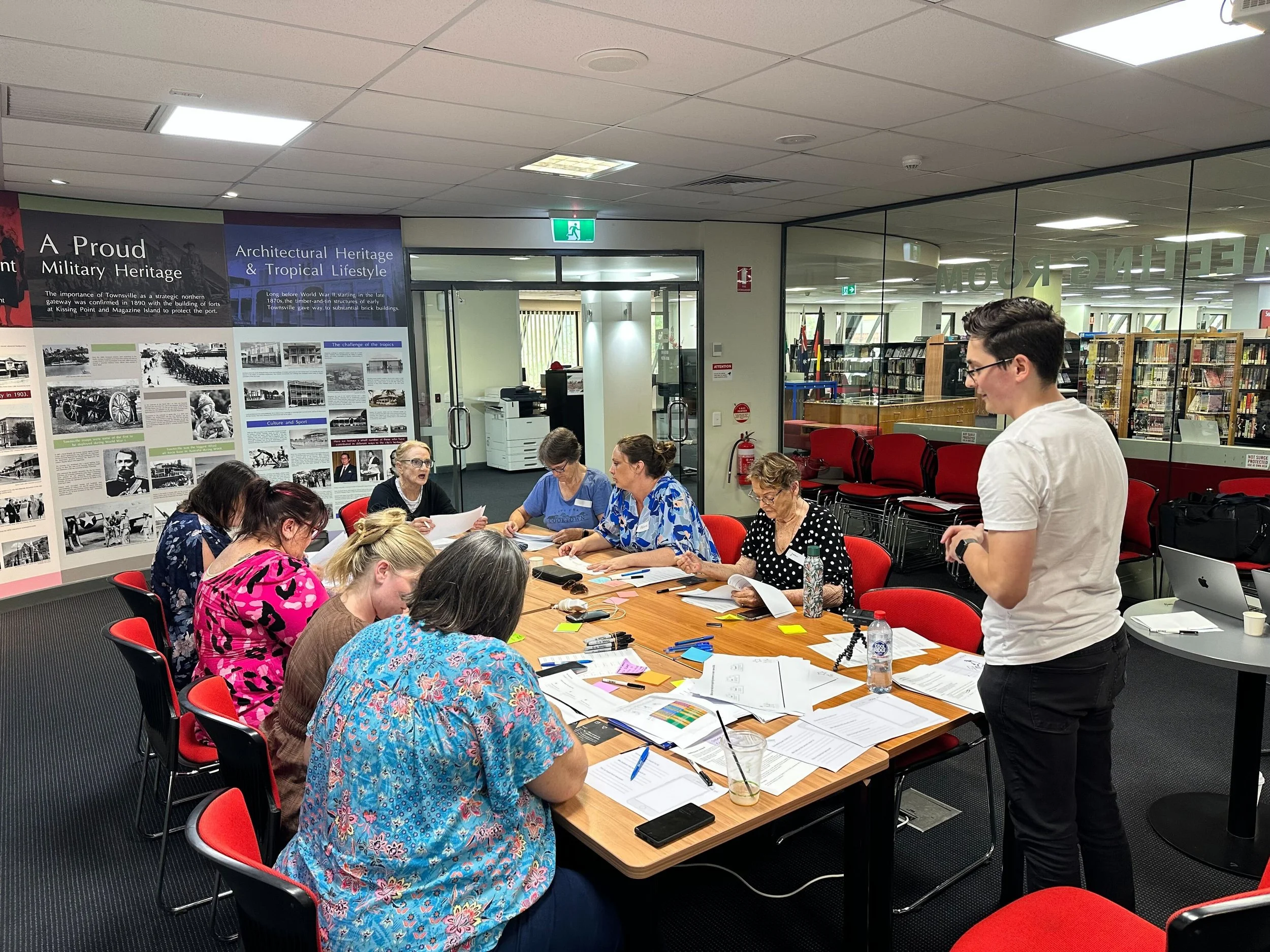
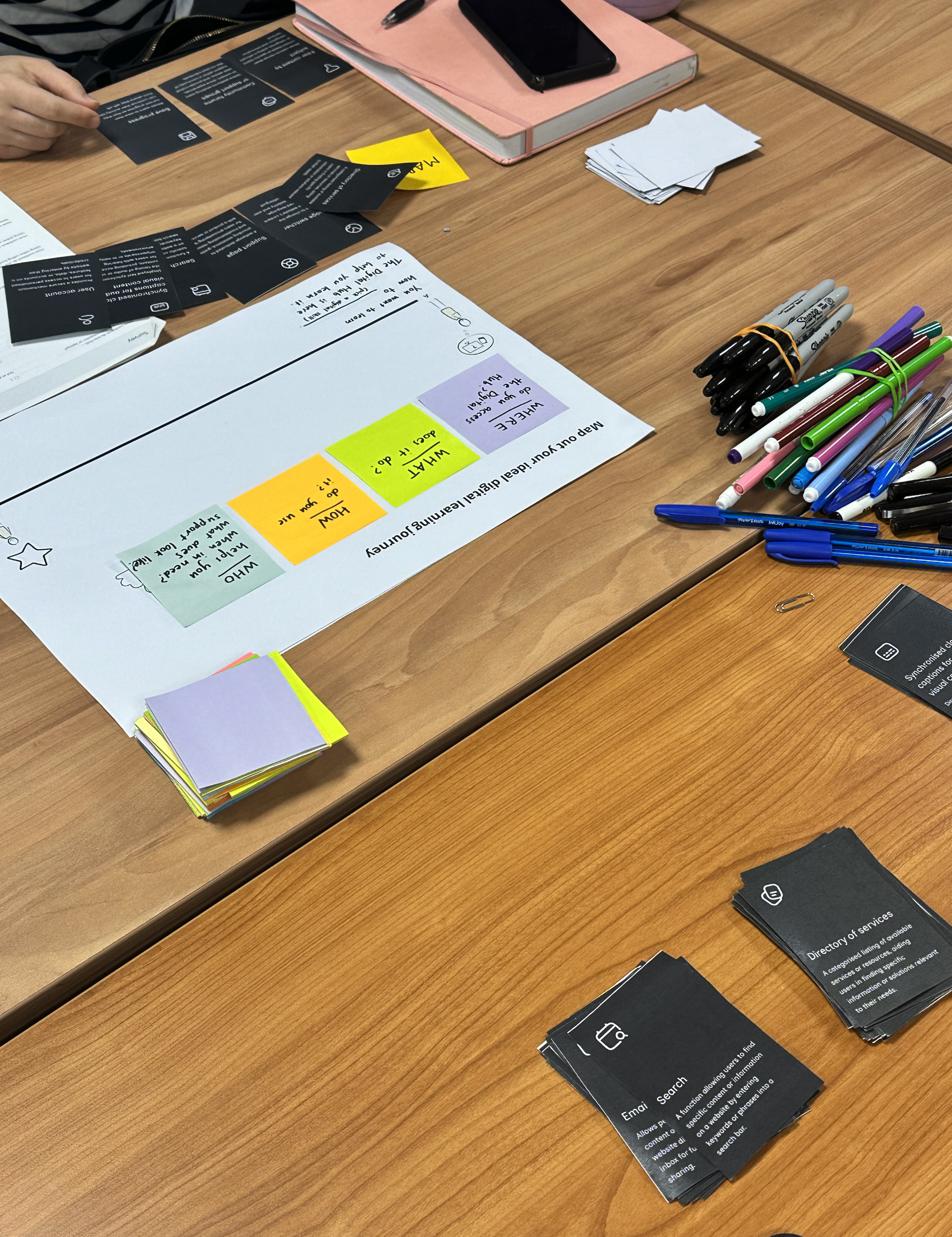
Led and supported team members in research with vulnerable cohorts using trauma-informed, accessible methods.
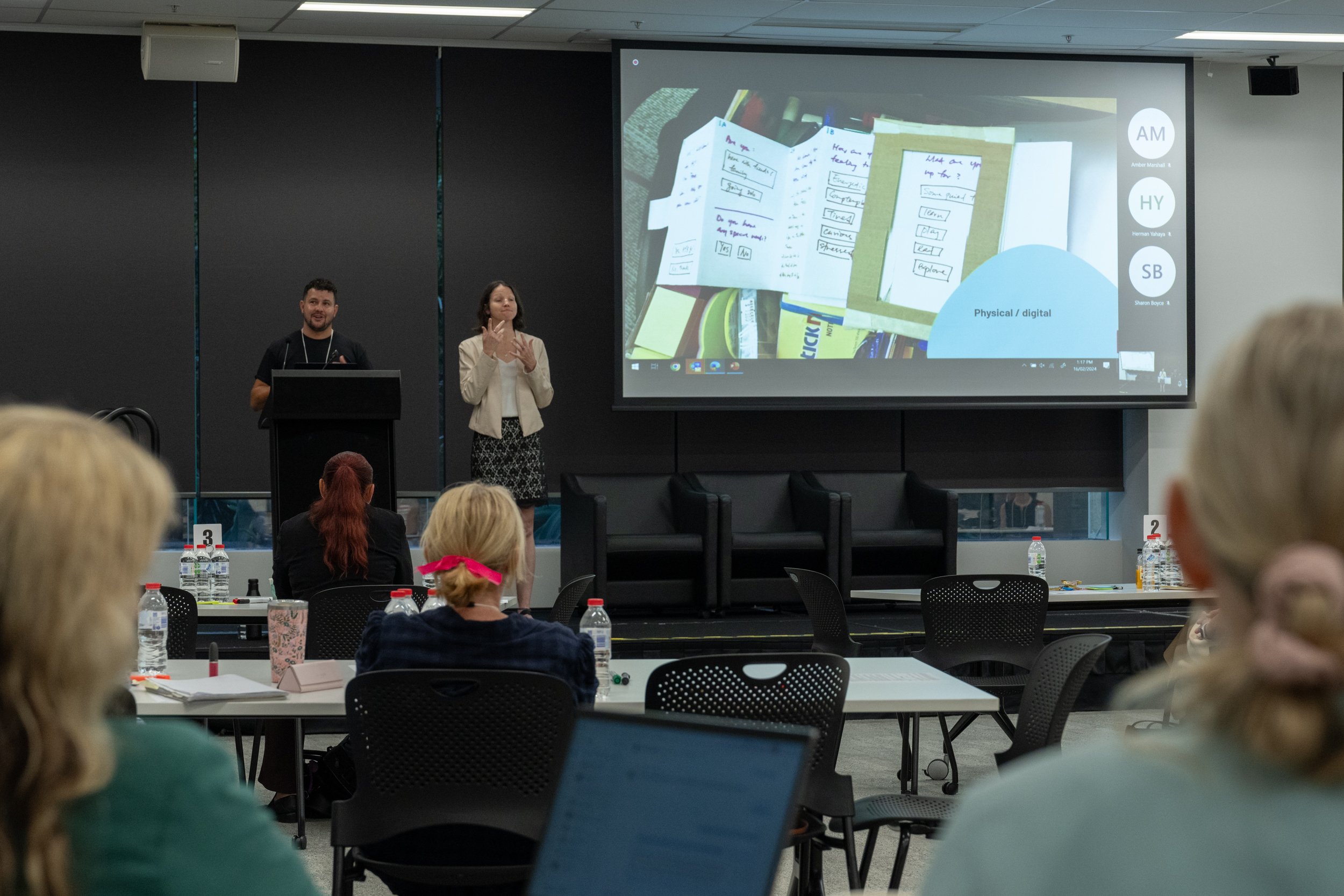
Defined the 3rd-party content quality criteria and connected with industry at events to understand support opportunities.
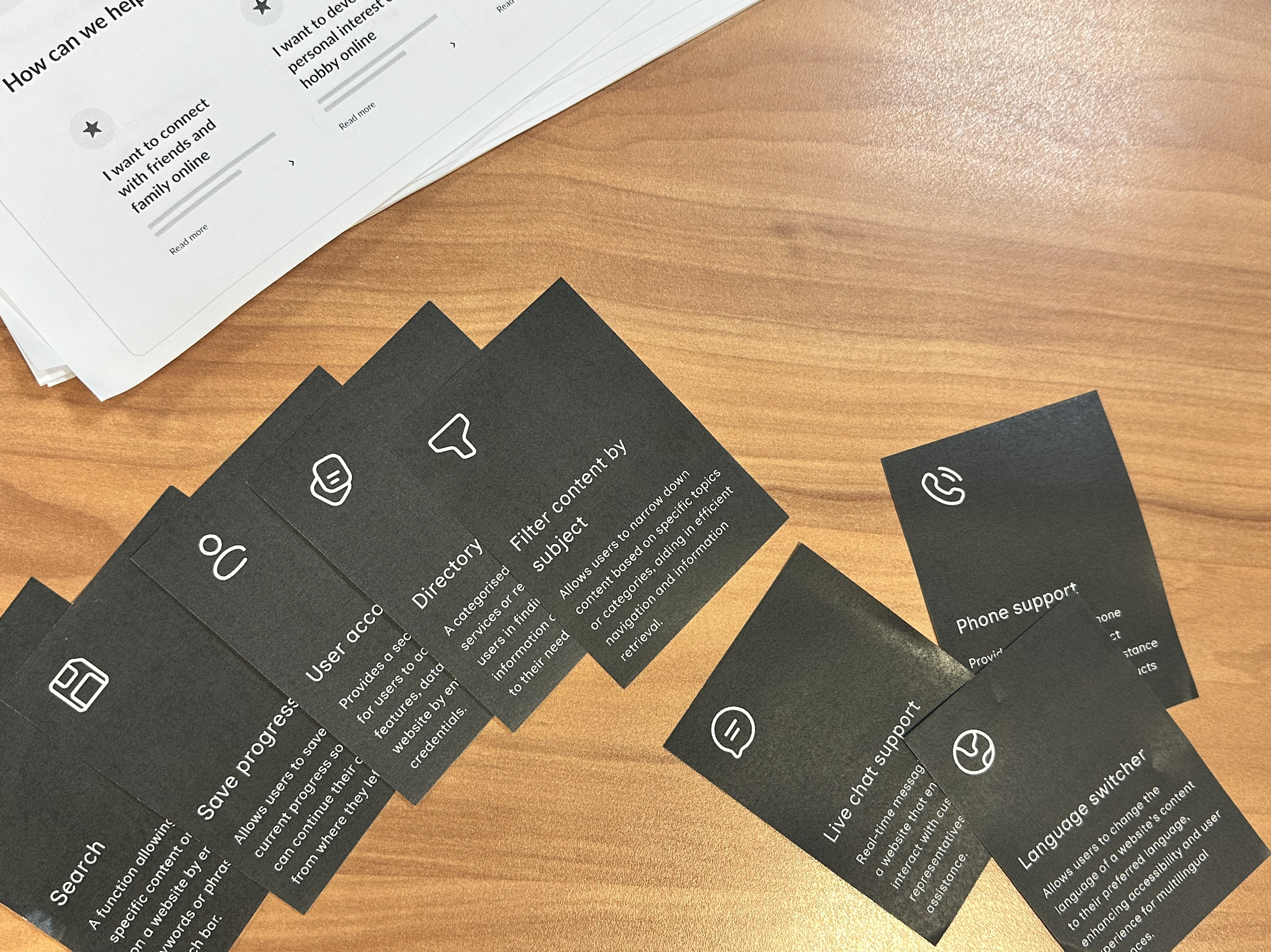
Prepared and enabled the team to deliver valuable prototype and testing sessions with excluded and vulnerable cohorts.
Advocated for and secured design system exemptions to deliver better on-site accessibility functions.
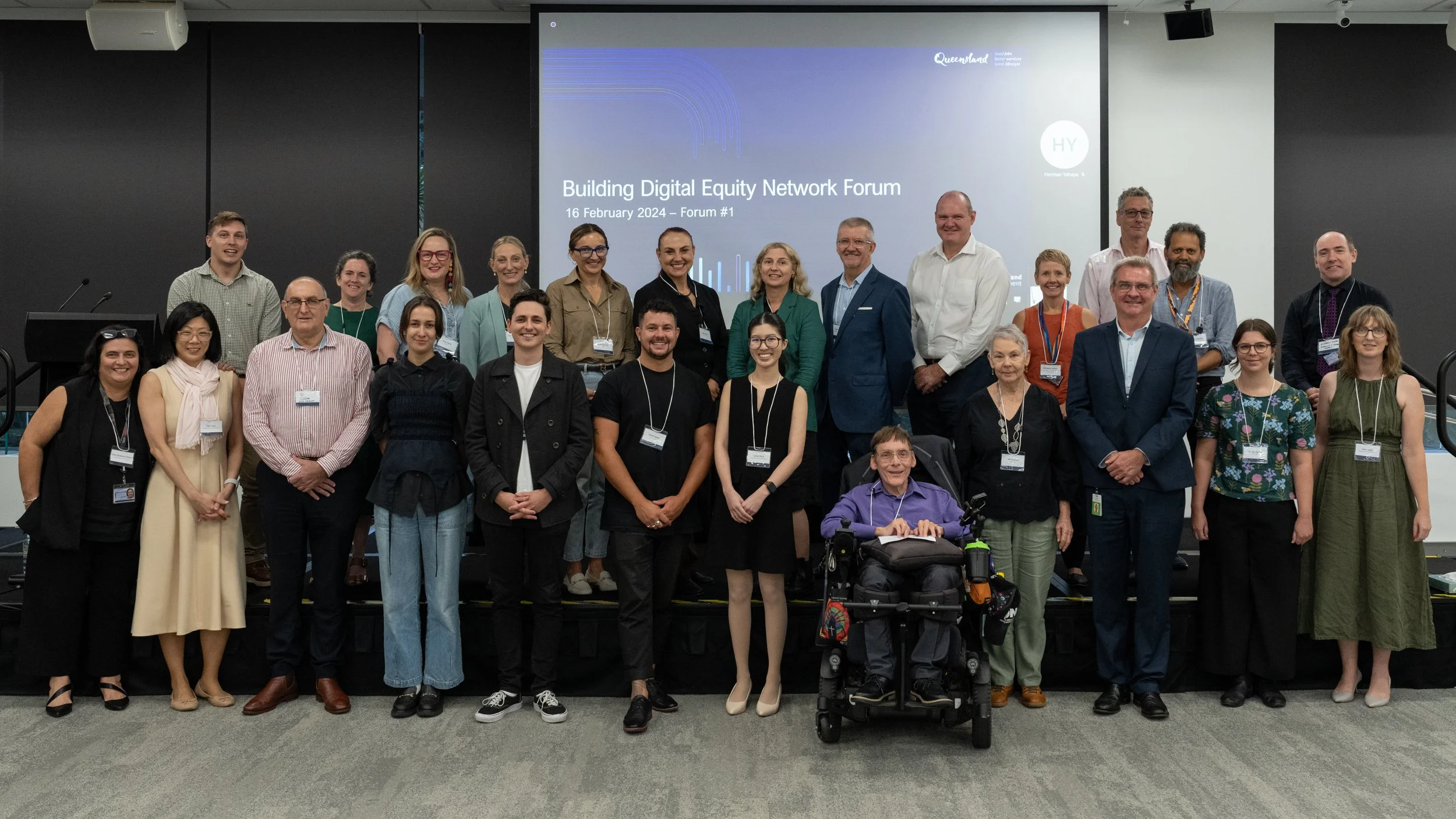
Led multidisciplinary collaborative team across policy, digital, industry, service design and lived experience.
What made this problem difficult
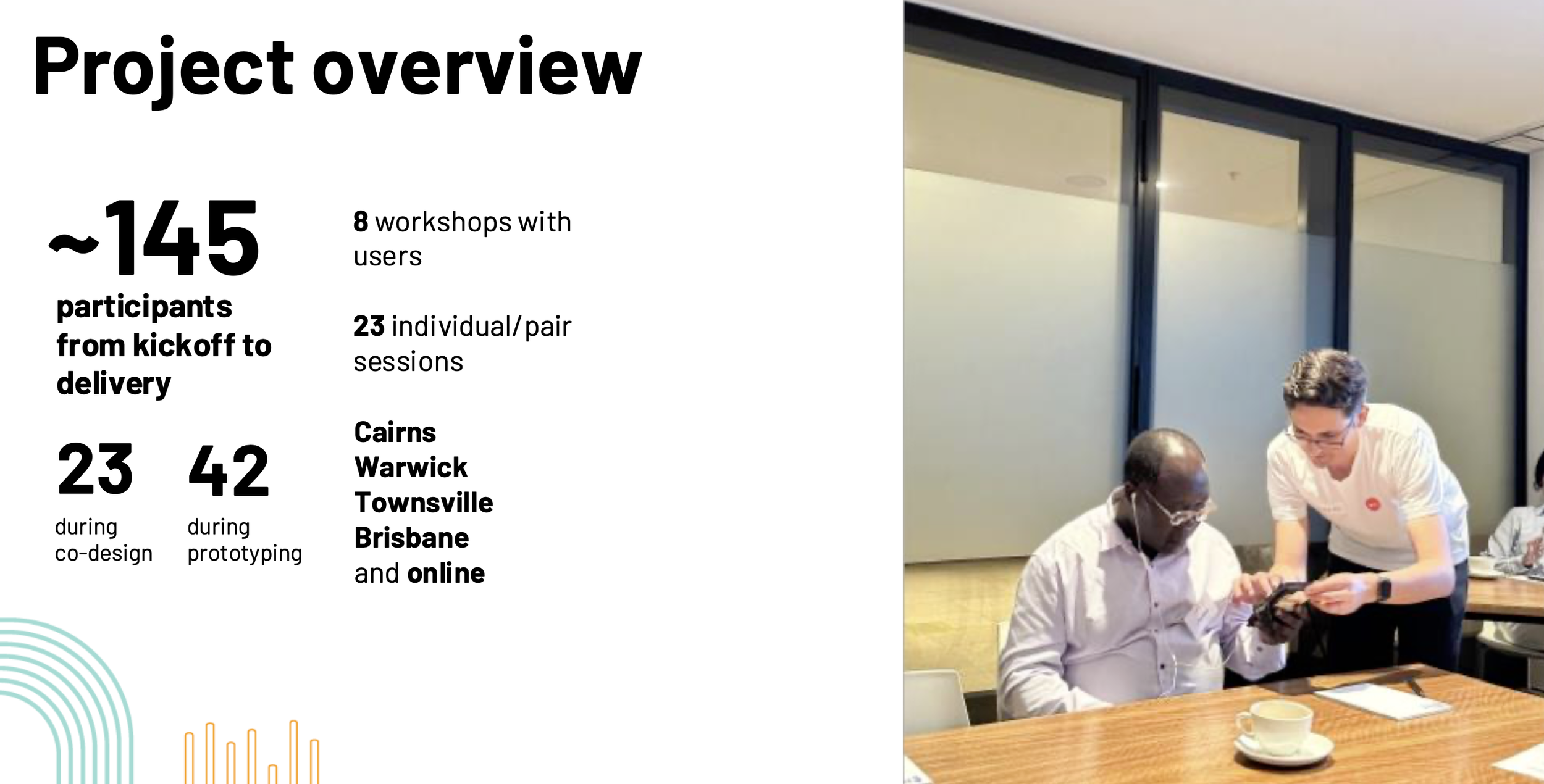
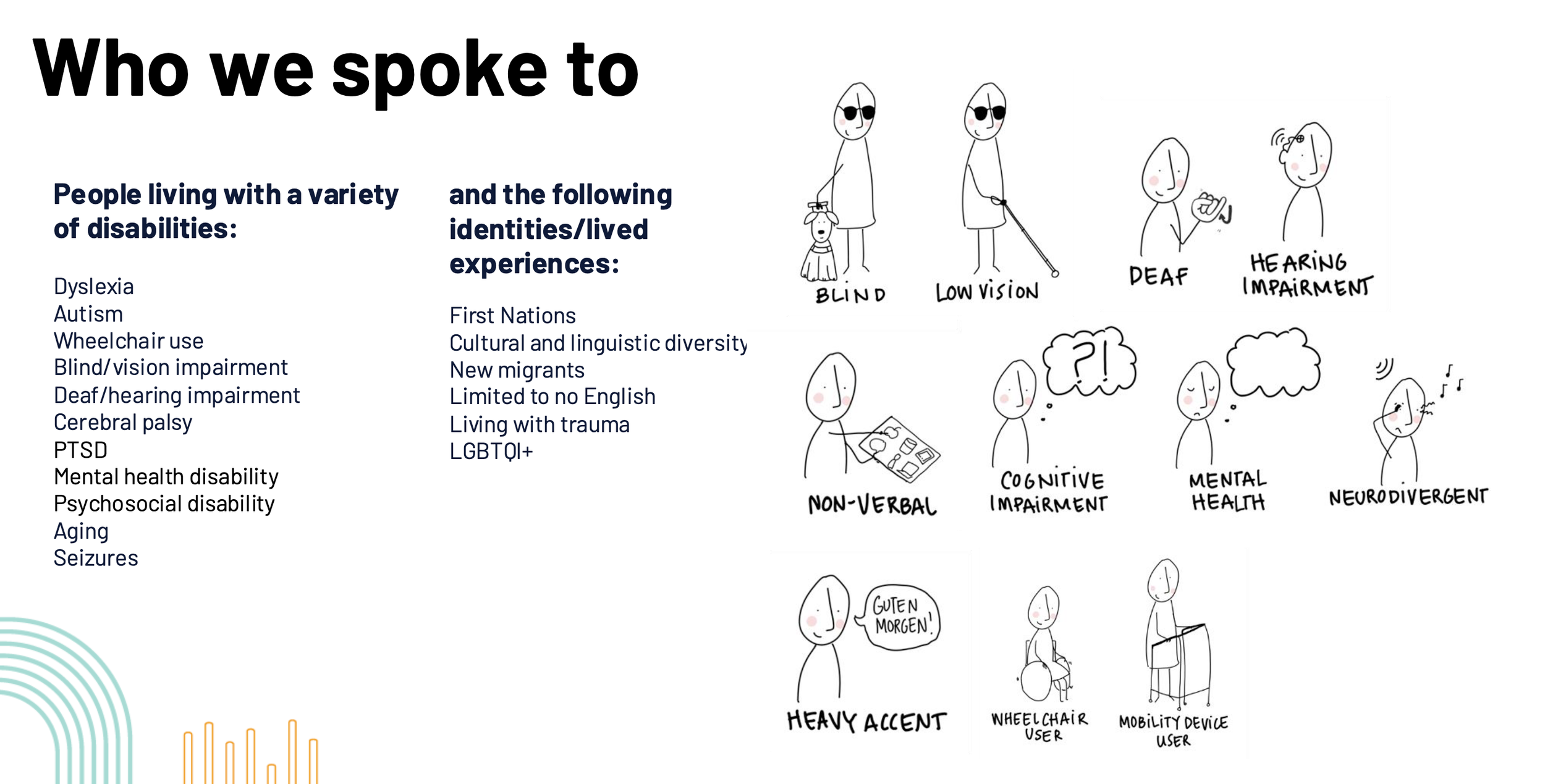
Finding, engaging and ensuring support for diverse user groups: low digital literacy, disability, neurodiversity, ageing, language barriers and mobility challenges, all present their own challenges and needs. Each of which needs to be individually designed for.
Constrained government budgets and resources.
The only scalable delivery model is digital, but the users needing help are the least digitally confident.
Engaging digitally excluded and vulnerable cohorts required slow, trust-building recruitment and trauma-informed research methods, not aligned with traditional project paces.
Low trust in government and past poor service experiences shaped user expectations and created difficulties in engagement.
The key strategic design questions
How do we engage digitally excluded Queenslanders at scale, in ways they can genuinely use and benefit from?
What role should frontline staff and existing services play in capability uplift?
How can we design a blended ecosystem (self-serve + assisted + community-led) that meets people where they are?
How do we design a single hub that works for vastly different needs, abilities, languages and impairments?
How do we create the most positive impact for traditionally excluded, vulnerable and underserved cohorts with constrained government budget and resources?
Key design decisions
1: Curate, don’t create: establishing content quality criteria
Issue: The government could either create new content or curate existing digital literacy resources. External resources varied widely in quality and accessibility; creating everything in-house was unrealistic within time and budget.
Decision: Create a content taxonomy and quality criteria. Only resources meeting the criteria were included, and partners or potential resources received feedback when their materials did not meet the required standard.
Trade-offs: Reduced overall control over content, but focused resources on content that was required to fill gaps in user needs.
Why it was right: Leveraged what was already there and delivered a consistent, high-quality user experience whilst freeing resources to create targeted content where real gaps existed.
2: Reframing navigation around user goals, not government structure
Issue: Users could not map their needs to bureaucratic categories. Government stakeholders preferred hierarchical, agency-based IA, but it was unintuitive and blocked access to critical support and services for users.
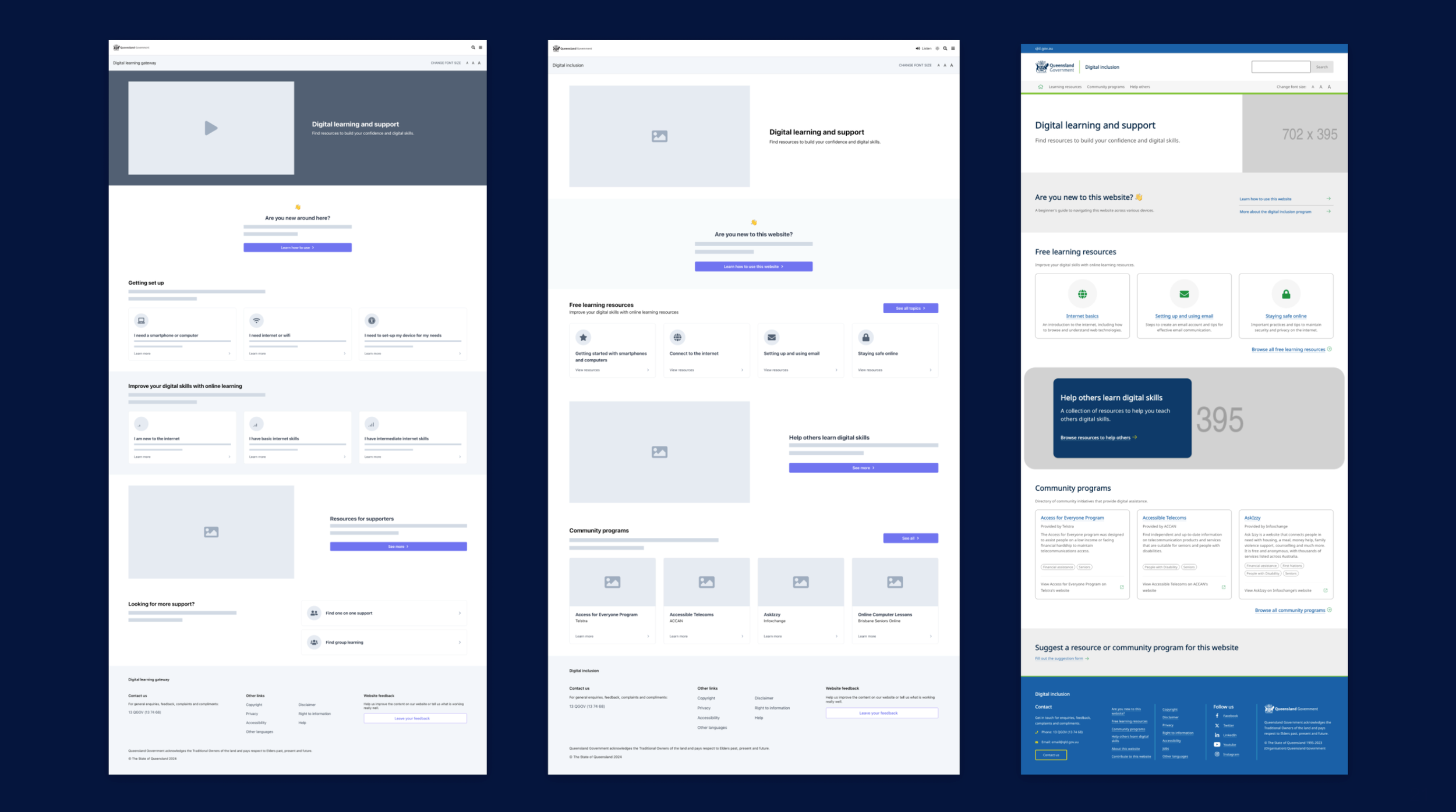
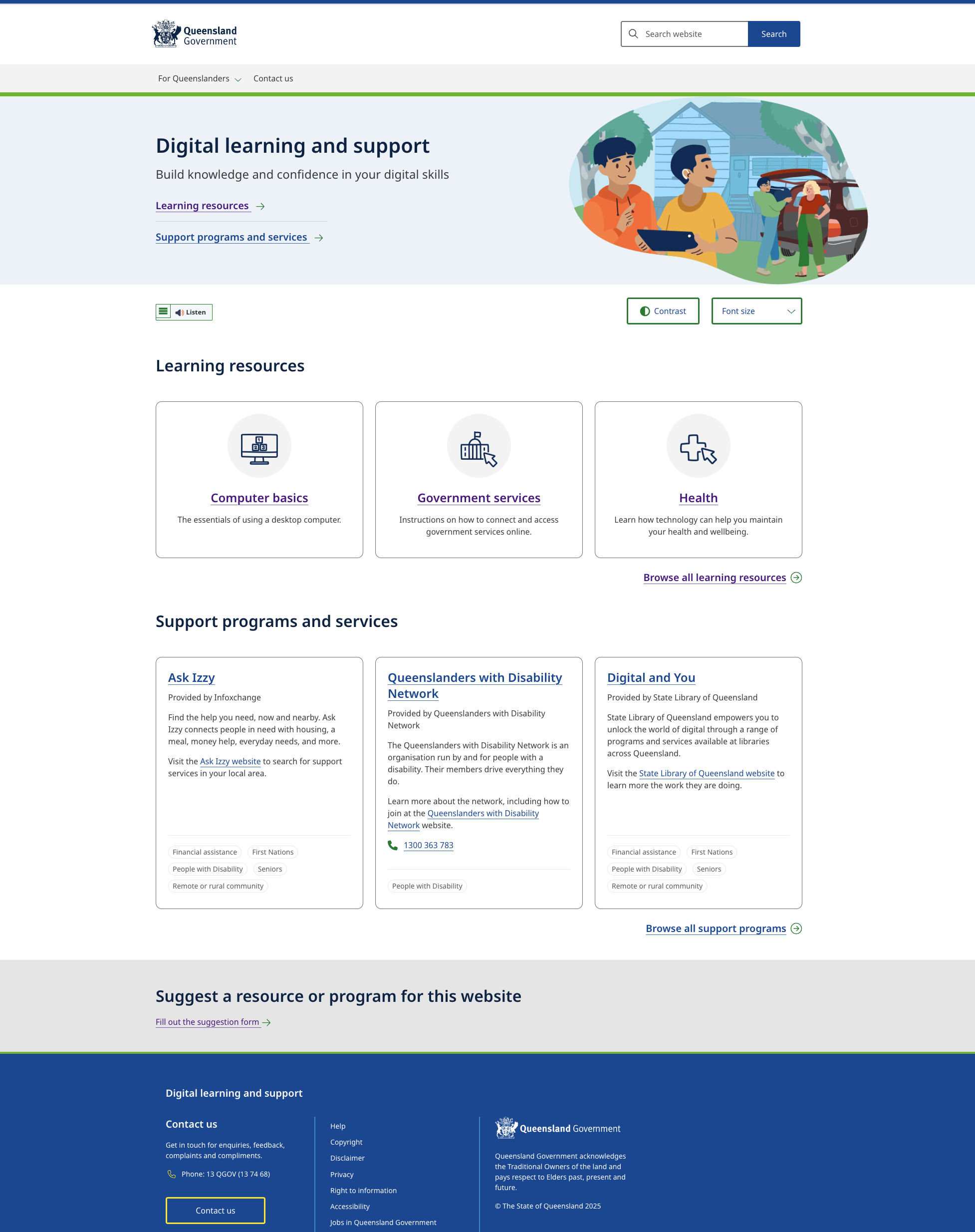
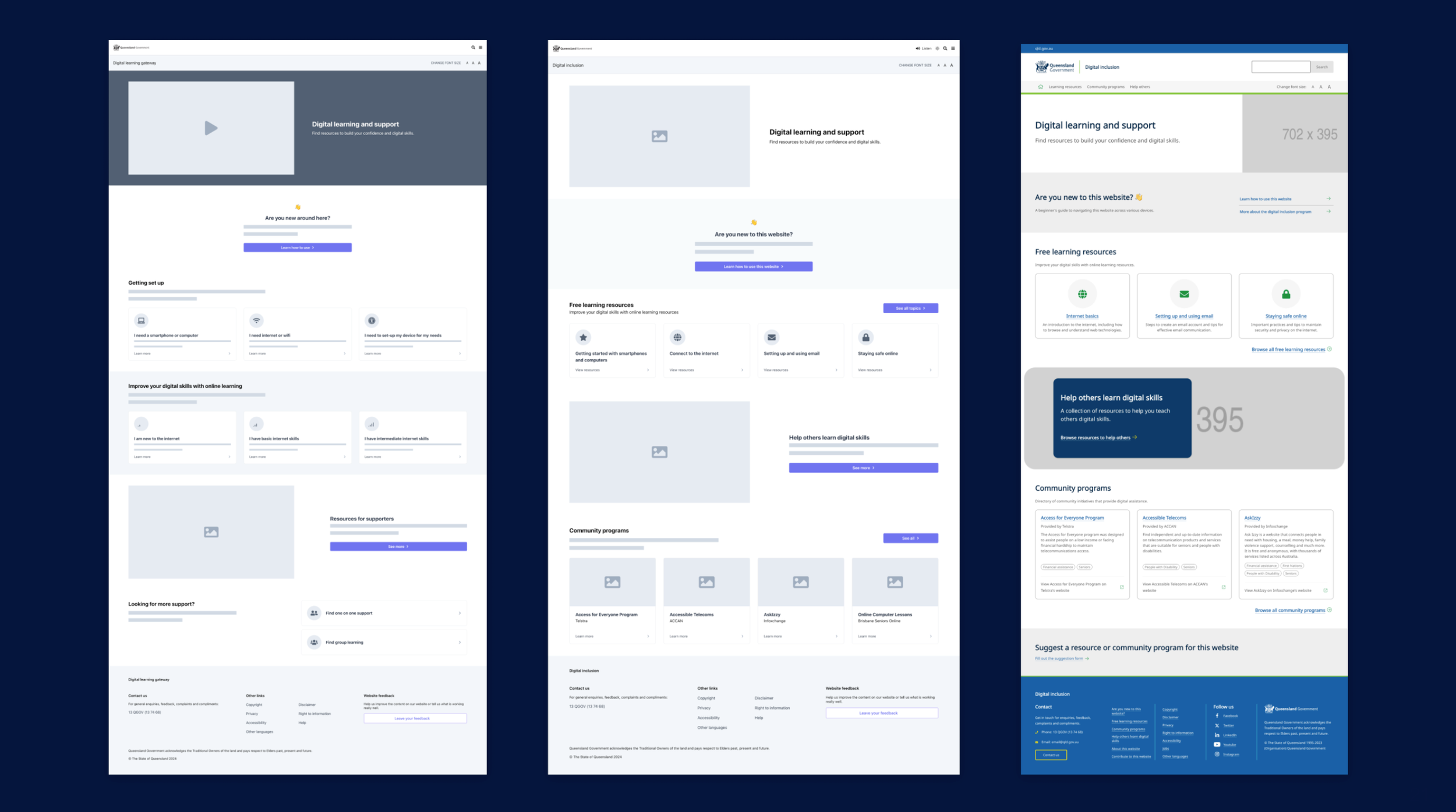
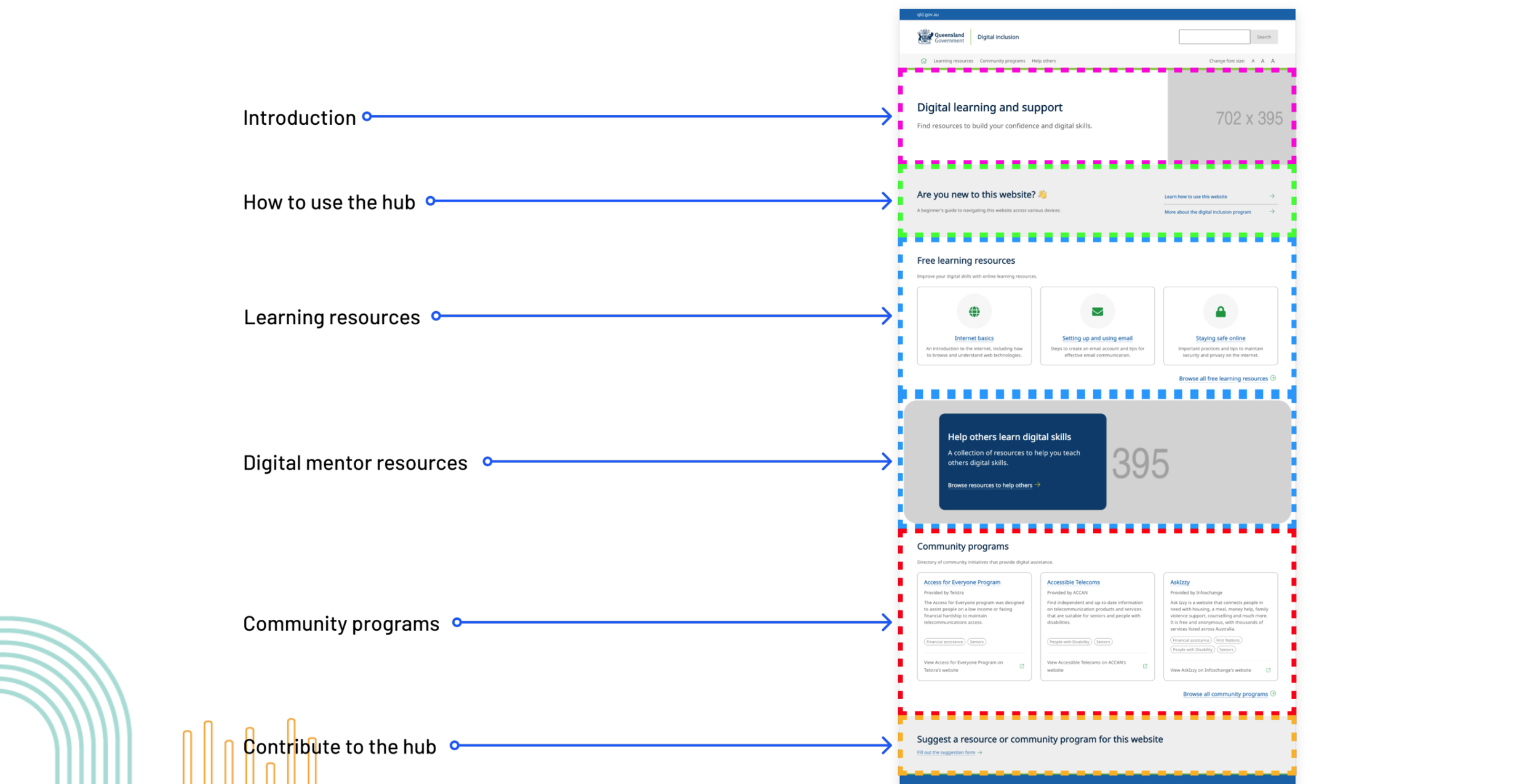
Decision: Redesigned navigation around outcome-based goals (e.g., “Learn the basics,” “Get help with devices,” “Stay safe online,” “Find local support”). Unifying resources under user-centred categories.
Trade-offs: Required a protracted stakeholder negotiation to receive an exemption and shift away from the traditional government taxonomy.
Why it was right: Users don’t need to understand government; they need to understand where to start. Goal-based navigation improved findability and confidence.
After testing: Testing validated the new structure; we refined microcopy and iconography to make pathways even clearer for low-literacy users.
3: Prioritising user autonomy over system constraints by adding enhanced accessibility features
Issue: QLD’s design system had no precedent for language tools, screen reader integration, font controls or colour-contrast toggles. Digital/IT teams resisted due to cost, complexity and precedent risk.
Decision: Led value–effort–equity prioritisation with executives, arguing for first-time deployment of enhanced accessibility features. Integrated WCAG AA+ capabilities including adjustable contrast, font scaling and text-to-speech.
Trade-offs: Challenged existing governance boundaries; required additional technical work that wasn’t initially budgeted.
Why it was right: Improved autonomy for users with disabilities, low literacy and ageing needs, and set a new accessibility benchmark for QLD Government.
After testing: Users with disabilities reconfirmed control features as essential. This led to the Department supporting the rollout of similar features across other sites.
Reflections
Proud of:
Designing trauma-informed co-design process that empowered excluded and vulnerable cohorts.
Creating a blended support model that delivered a scalable digital solution but also met users where they were by supporting frontline staff increasing reach across remote and regional communities.
Advocating for, and securing, advanced accessibility enhancements beyond WCAG AA.
Would change:
Engage industry partners earlier (telcos, technology companies & NFPs) to leverage funding and existing digital inclusion programs.
Provide a longer recruitment runway for highly vulnerable cohorts to build trust safely.
Strengthen ongoing governance to maintain quality and consistency across external resources.
Outcomes
Statewide Digital Skills Hub launched in 6 months.
Frontline staff recognised as critical to delivery and capability uplifted across library, community centre and service centre roles.
Improved access for digitally excluded users across First Nations, multicultural and regional communities.
Recognised as a leading example of accessibility within Queensland Government.