ING: Innovation & Design Transformation
ING Australia wanted to embed customer-centred innovation and design capabilities across the entire organisation, more than 2,400 staff, so that any team could identify opportunities, test ideas with customers, and make evidence-based decisions.
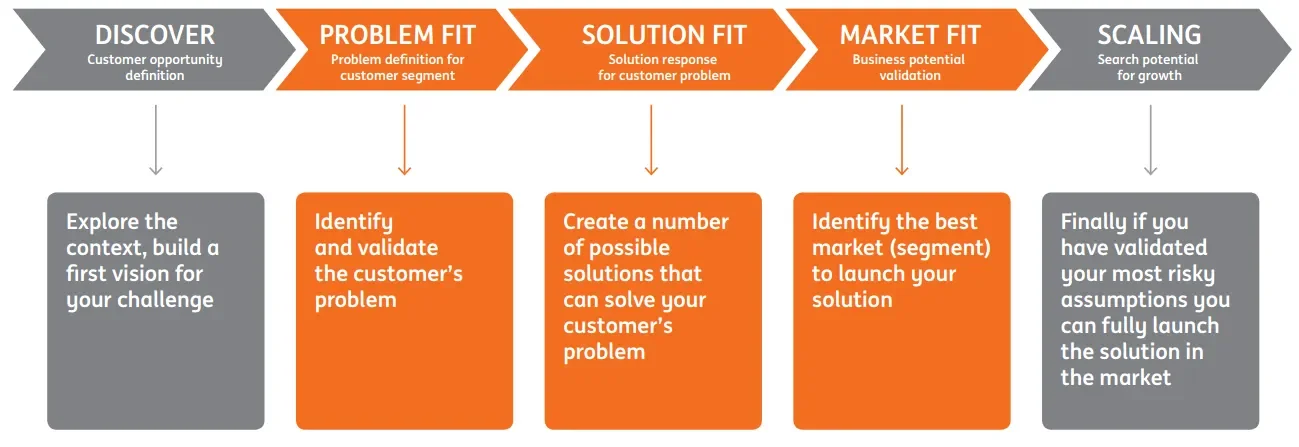
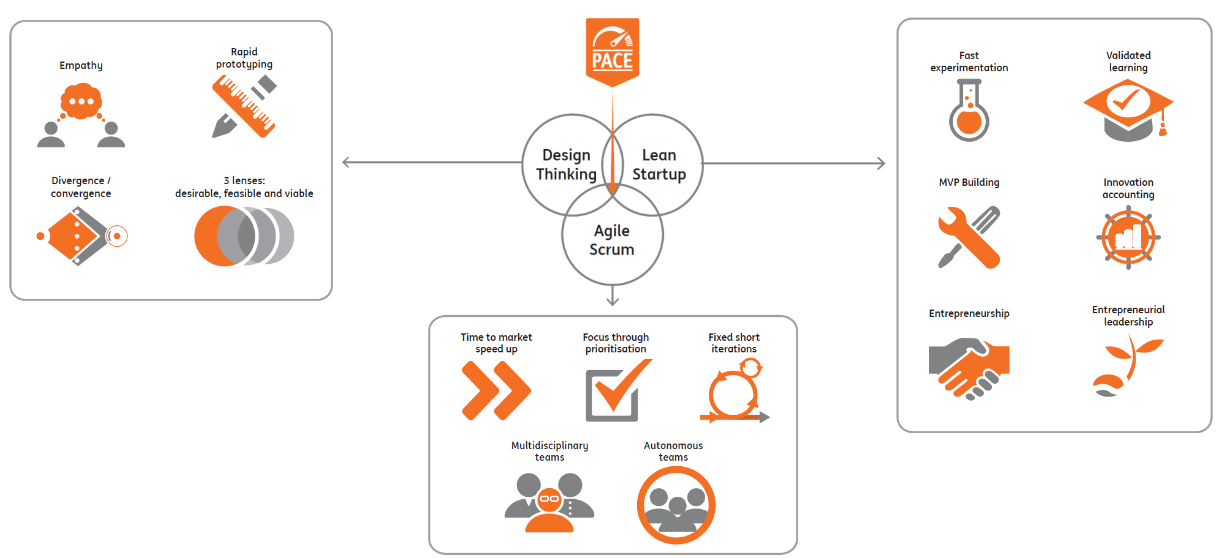
The goal was to localise and operationalise ING’s global innovation system (PACE: Design Thinking + Lean Startup + Agile) and make innovation part of BAU, not the domain of specialists or a central “lab.”
This work strengthened ING’s responsiveness to customer needs, reduced risk through earlier testing, and created a long-term organisational capability that still operates years later.
Role & Responsibilities
Led the deployment and capability uplift team.
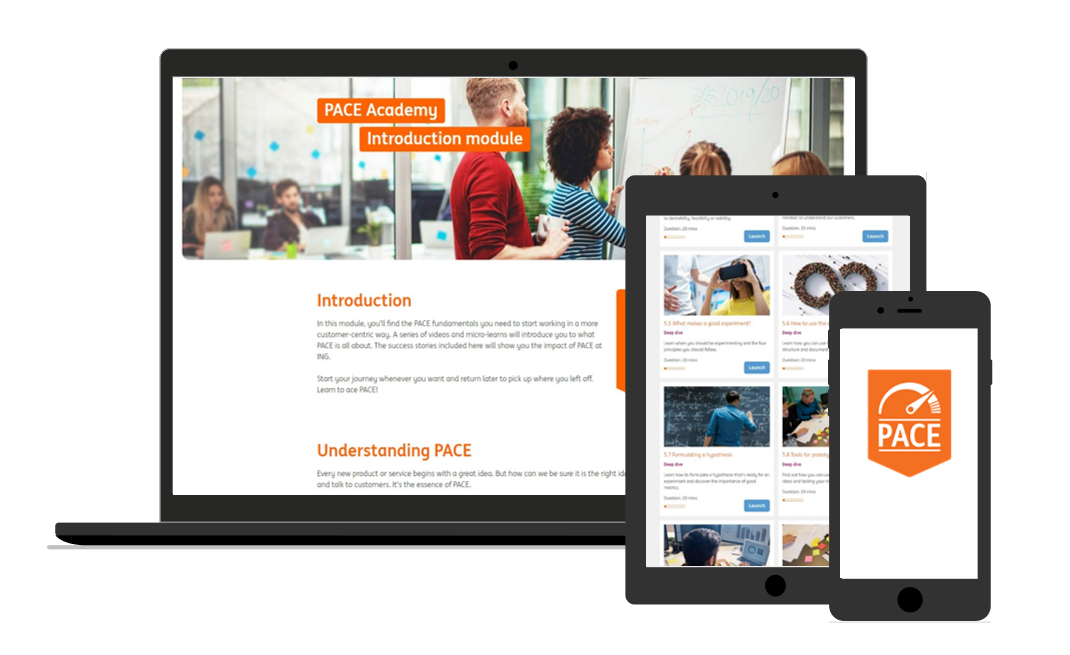
Designed training frameworks, workshops and toolkits.
Facilitated cross-team capability uplift and coached facilitators from frontline staff to executives.
Established governance structures for safe, rapid customer testing.
Collaborated with risk, legal, compliance and product leadership to embed evidence-based decision-making and funding stage gates.
Drove cultural change from assumption-led to evidence-led innovation.
What made this problem difficult
Vast differences in innovation and experimentation literacy across 2,400 staff, mostly low.
Legal, risk, and compliance viewed customer testing as risky and became an initial barrier to evidence.
Ensuring aligned and consistent approaches across teams and departments so that ING talks and behaves consistently when applying innovation and design practices.
Staff pushback and frustration at the change to the business processes they have become expert in, and threatening how they traditionally acquire funding.
Limited access to customers slowed learning cycles and reduced evidence quality.
The key strategic design questions
How do we enable 2,400 staff to identify customer needs and validate ideas quickly and safely?
How can PACE be adapted into something practical and relevant for BAU teams, not only specialists?
What evidence gates support quality decisions while still enabling experimentation and delivering increased value from funding?
How do we shorten feedback loops between opportunity identification and customer research or testing?
Key design decisions
1: Train-the-trainer model to scale capability across the organisation
Issue: A small central innovation and design team could not support innovation across 2,400 staff; demand far exceeded the capacity of specialists.
Decision: Built a train-the-trainer model where high-potential staff were trained as facilitators of PACE practices, enabling distributed uplift through peer-led coaching.
Trade-offs: Significant upfront mentoring and engagement from initial graduates; removed high contributors temporarily from BAU roles.
Why it was right: Created a sustainable, self-reinforcing capability that persisted long after the project ended.
2: Creating structured workshops and toolkits for framing, testing and evidence-based decisions
Issue: Teams jumped to solutions, lacked shared language, and struggled to test ideas effectively; decisions were often based on assumptions rather than evidence.
Decision: Developed a library of structured workshops and tools — problem framing canvases, customer evidence grids, experimentation plans, and rapid business case templates — embedded into the PACE workflow.
Trade-offs: Required redesigning existing project templates and educating stakeholders across risk, compliance and product.
Why it was right: Established a consistent, organisation-wide method for evaluating opportunities; improved clarity, alignment and decision quality.
3: Establishing ING’s user research and testing centre to accelerate learning cycles
Issue: Teams struggled to access customers; testing was slow, difficult to coordinate, and often deprioritised due to effort.
Decision: Created an ‘opt-in’ voluntary customer research and testing programme where customers could express interest in testing new products and services in exchange for remuneration, allowing teams to access and rapidly test concepts, prototypes, messaging and UX with real customers.
Trade-offs: Required new governance for privacy, consent and risk; needed ongoing coordination and staffing.
Why it was right: Shortened learning cycles dramatically and strengthened the evidence behind ideas before significant investment.
Reflections
Proud of:
Creating a capability system that still operates years later — a rare sign of deep organisational adoption.
Making innovation feel practical and relevant to everyday work, not abstract or “for specialists only.”
Empowering staff across all levels to create customer value through evidence-based practice.
Establishing a testing centre that transformed access to customer insight.
Would change:
Form more cross-disciplinary teams to accelerate delivery and mix skills more intentionally.
Work with leadership earlier to set expectations about engagement and long-term value to reduce BAU pressure.
Extend coaching for newly trained facilitators to help them shift from doing the craft to teaching the craft.
Outcomes
2,400 staff trained or enabled to participate in innovation.
Organisation-wide shift toward evidence-based decision-making.
Reduced concept to delivery time through faster testing and clearer evidence gates.
Higher quality of funded ideas due to structured validation.
Distributed innovation capability embedded as BAU, still active years later.