CRDC: National Innovation Portfolio for Sustainable Agriculture
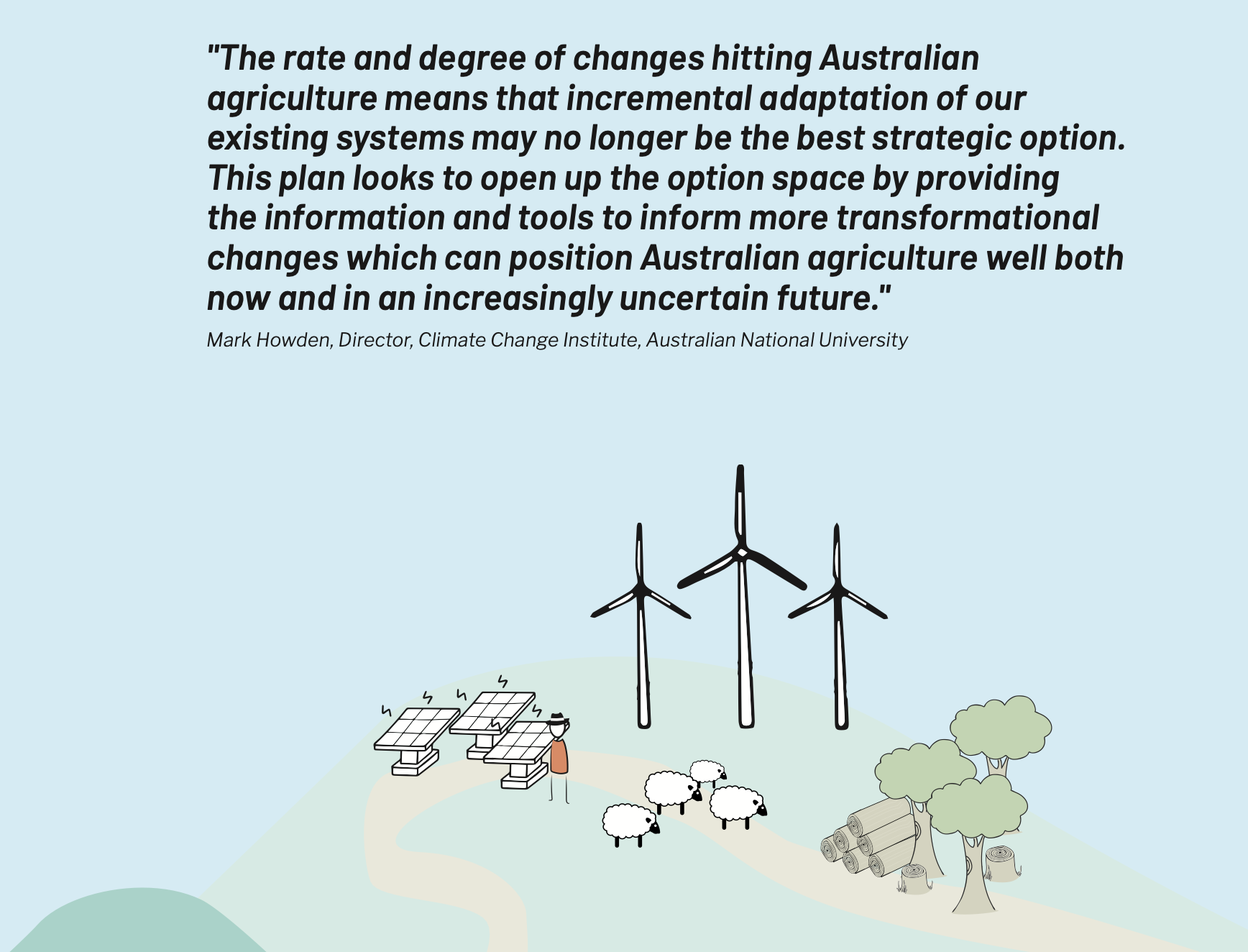
Australia's agricultural sector is facing accelerating climate risks, from shifting rainfall patterns and biosecurity threats to supply-chain disruption, declining productivity and regional vulnerability.
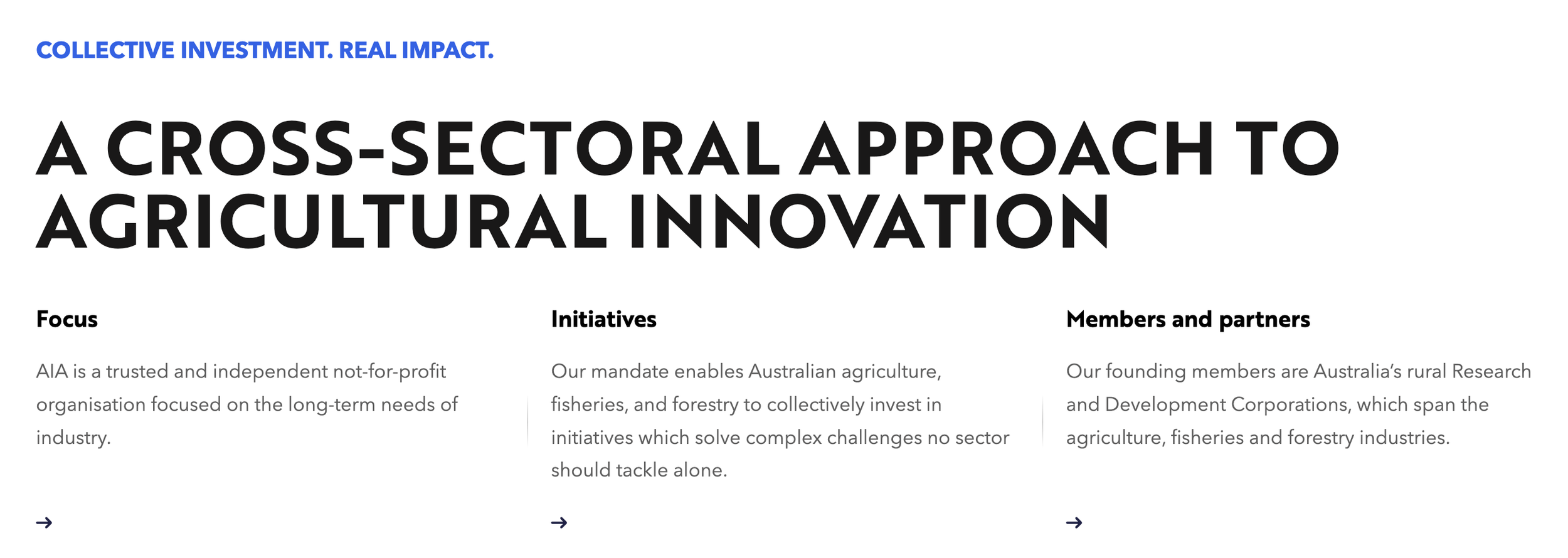
I led the design of a national cross-industry climate innovation portfolio for all 15 Rural Research & Development Corporations (RDCs): a coordinated investment strategy that identified the highest-value opportunities for climate adaptation and mitigation, aligned historically fragmented industries behind a shared direction, and established a fundable 10–30 year roadmap for action. This culminated in the creation of AIA (Agriculture Innovation Australia).
Through extensive co-design with over 80 stakeholders across industry, government and research, the work created Australia's first unified rural climate innovation strategy. The portfolio secured $11 million in seed funding, generated more than $100 million in value for primary producers, and continues to guide national investment in resilience, decision-support tools, climate adaptation and emissions reduction.
Role & Responsibilities
Led discovery, systems mapping and stakeholder engagement across industry, government and research sectors.
Designed and facilitated workshops with 80+ stakeholders to identify climate risks, future opportunities and investment priorities.
Synthesised climate science, industry insight and economic considerations into a shared strategic framework.
Co-designed the portfolio structure, investment logic, governance model and implementation roadmap.
Developed future-state narratives, prioritisation frameworks and decision-making tools to support executive alignment.
Worked closely with RDC CEOs and senior leaders to build support, secure funding and align investment decisions.
Video for AIA’s Environmental Accounting Platform - one of the portfolio initiatives.

What made this problem difficult
Highly fragmented ecosystem: 12 RDCs with different commodities, mandates, priorities and stakeholder groups.
Complex climate uncertainty: impacts varied significantly by geography, industry, enterprise size and time horizon.
Cross-sector alignment: success depended on collaboration between organisations that had historically operated independently.
Political and economic sensitivity: climate adaptation and mitigation initiatives often involved behavioural change, investment and perceived risk.
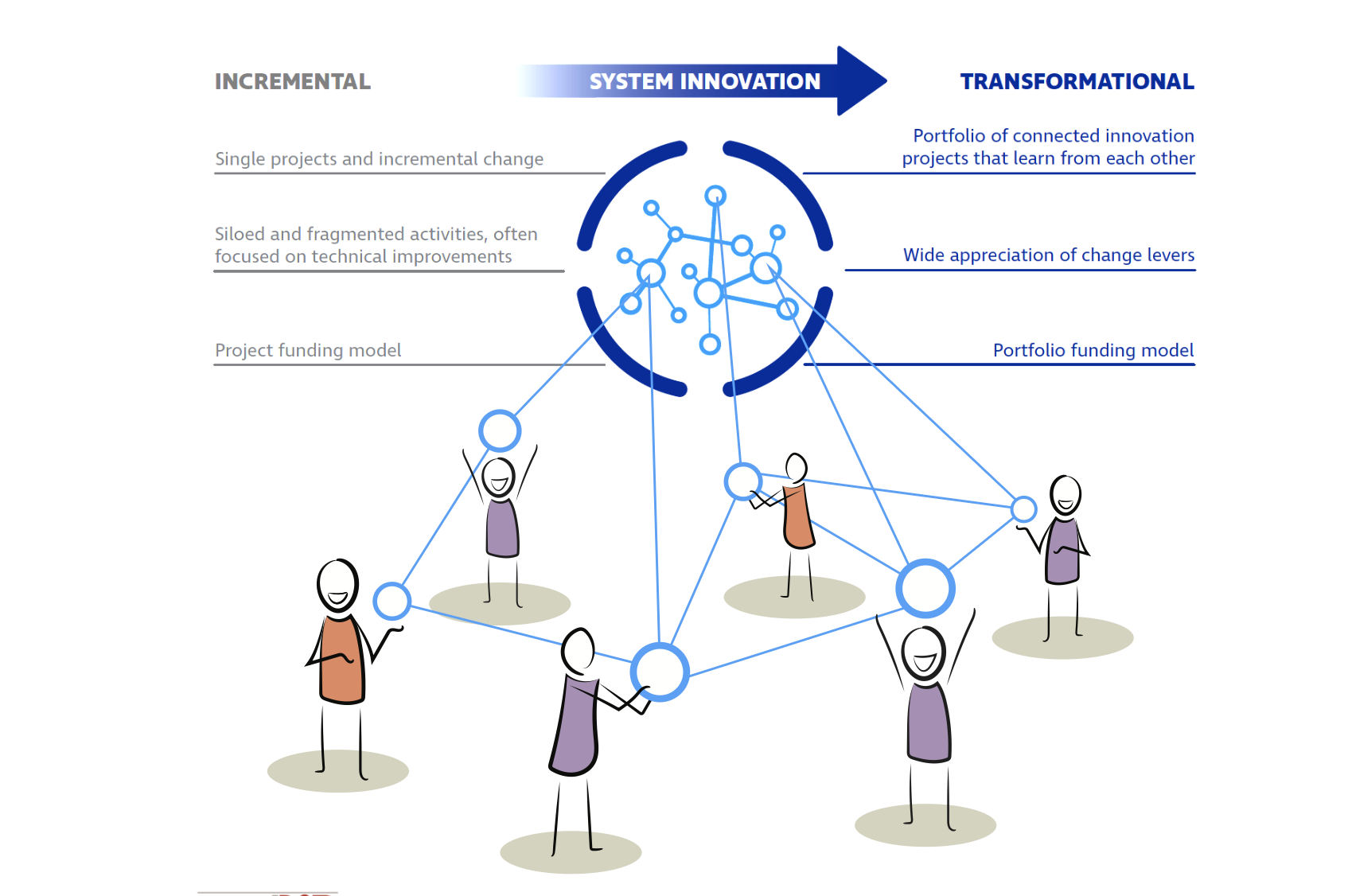
Large-scale systems challenge: required moving beyond individual projects to create a coordinated national portfolio.
The key strategic design questions
What climate risks and opportunities are common across all RDCs, and where is collaboration essential?
Which interventions would create the greatest impact on resilience, productivity and emissions reduction?
What delivery models would enable adoption at scale across diverse agricultural sectors?
What governance structures are required to coordinate investment, accountability and delivery?
How should investment be prioritised and sequenced over a 10–30 year horizon?
Key design decisions
1: Designing a standalone investment vehicle
Issue: Without governance or a different structure, the portfolio would dissolve back into commodity silos.
Decision: Established a separate investment vehicle - AIA is invested in by RDCs but acts independently, focusing on cross-industry, national initiatives. AIA is structured with clear decision rights, accountabilities, investment sequencing, reporting cadences and pathways for producer-led feedback.
Trade-offs: Required RDCs to relinquish some autonomy to collaborate nationally.
Why it was right: Established the correct organisational and governance structure to move beyond the silos of the RDCs.
2: Shift to a goal-oriented, behaviour-led Information Architecture
Issue: The topic-based IA was text-heavy, fragmented and overwhelming. Users, especially those in financial stress, didn’t know where to start.
Decision: Rebuilt the IA around real-life financial goals (“Manage money,” “Reduce debt,” “Plan for the future,” “Grow wealth”). Structured clear journeys with steps, tools, and next actions.
Trade-offs: Large rewrite effort across legacy content and the need to restructure navigation and pathways.
Why it was right: Users could self-identify quickly, increasing clarity, confidence and ease of orientation. It aligned directly with behavioural research: people think in goals, not categories.
After testing: Goal-led journeys outperformed original topic-based navigation. Users reached relevant content, feeling “less overwhelmed.”
3: Integrate teaching resources to support classroom financial capability
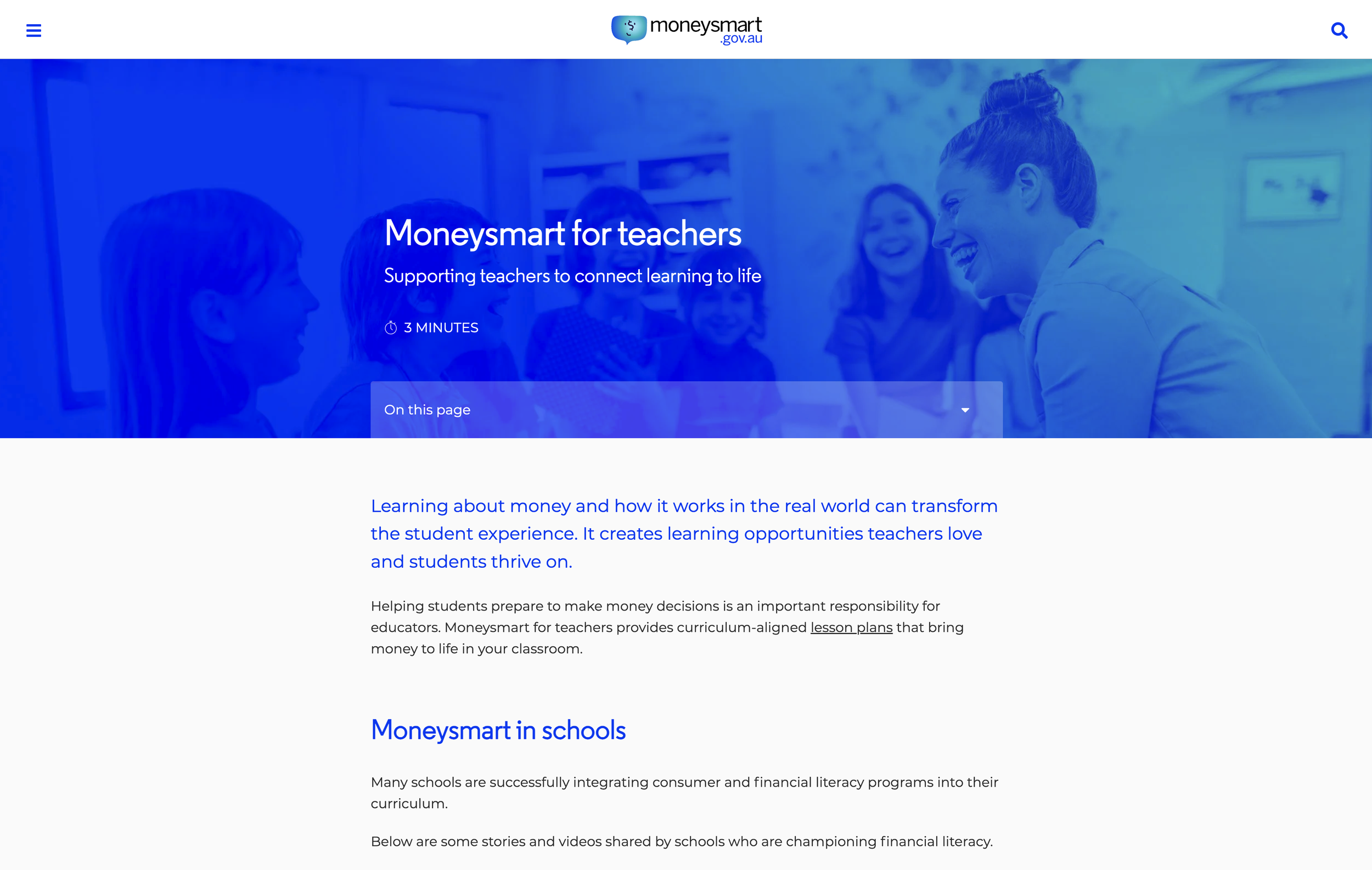
Issue: MoneySmart had strong public use, but teachers lacked clear, curriculum-aligned materials. Educators were using inconsistent third-party content, making classroom delivery difficult and limiting long-term financial capability.
Decision: Integrated a dedicated teaching resources pathway into the IA with curriculum-aligned lesson plans, classroom activities and simplified student versions of key tools (e.g., spending planners, budgeting exercises), enabling teachers to confidently use MoneySmart in the classroom.
Trade-offs: Required the rebalancing of effort between consumer content and teacher-focused materials, but critical as teachers are an important contributor to improved financial literacy and capability.
Why it was right: Early education is the highest-leverage driver of long-term financial wellbeing. Embedding structured, ready-to-use teaching resources made MoneySmart a national financial capability platform rather than just a public information site.
After testing: Teachers reported higher confidence and ease of use; more than 70% of all Australian schools have accessed the resources on ASIC's MoneySmart website since.

Reflections
Proud of:
Turning a highly fragmented and politically complex challenge into a clear, actionable national strategy.
Creating a shared vision that aligned organisations that had historically worked independently.
Designing a portfolio that balanced strategic ambition with practical implementation.
Building trust and consensus across diverse stakeholder groups with competing priorities.
Demonstrating how systems thinking can translate climate complexity into investable opportunities.
Would change:
Involve producers earlier and more deeply throughout the design process to strengthen adoption pathways.
The work started with a future state proposition, which we chose to pivot on but I would create more space to listen and enable producers to air the ranging and critical issues they face before moving to solutions.
Create stronger links between the portfolio and emerging private-sector investment opportunities.
Outcomes
Created Australia's first coordinated cross-industry climate innovation portfolio across all 12 RDCs.
Secured $11 million in seed funding to launch the portfolio.
Generated more than $100 million in value for Australian primary producers.
Aligned industry, government and research stakeholders behind a shared climate strategy.
Increased collaboration between sectors that had previously operated largely independently.
Created nationally significant initiatives focused on climate resilience, adaptation, emissions reduction and future competitiveness.